
Event Key Takeaways: Launch of A New Guidance & Practice Tool on Intersectionality
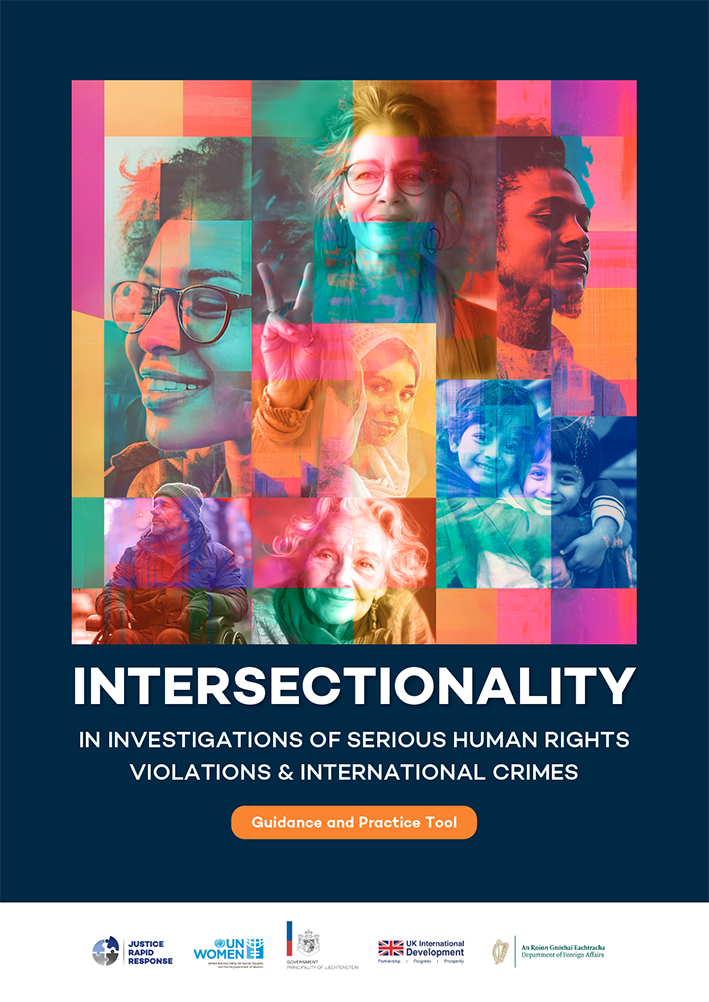
Early March, Justice Rapid Response had the pleasure of hosting with UN Women and the Permanent Mission of the United Kingdom to the United Nations in New York a launch event of our new Guidance and Practice Tool on Intersectionality in Investigations of Serious Human Rights Violations and International Crimes on the sidelines of the 70th session of the Commission on the Status of Women.
This event was an opportunity to highlight the benefits and demonstrate the practical application of the Tool. Participants could exchange views on the implementation of the Tool, in times of current financial, capacity, and political challenges. The event also aimed at fostering engagement around the Tool, encouraging dialogue, and facilitating the creation of a network of users, policy makers, and advocates.
Here are a few key takeaways of our event:
- Among the main objectives of adopting an intersectional lens is to effectively leave no one behind, as it contributes to unpacking the lived experience of victims and survivors by taking into account how their intersecting identities can become vulnerabilities, and how these vulnerabilities translate into harm and impact;
- The Tool is made for practitioners and identifies the practical steps to take when planning for an investigation to assure an investigative team’s capacity to adopt an intersectional approach throughout an entire process;
- At the staffing stage, organizations should seek to secure diversity in their investigative teams. The integration of relevant social, cultural, linguistic and legal knowledge of a given context is essential as it contributes to building trust with the survivors, community leaders, and the broader community.
- Building early on a trusted relationship with local communities strengthens the documentation process, delivering better results faster and shaping positively the justice process that will unfold.
- At the evidence collection and analysis stage, the use of disaggregated data is critical. Uncovering patterns of violence that may lead to the identification of specific types of violations can only become visible when key aspects such as gender, ethnicity and age are broken down into distinct categories. In certain cases, such as the atrocity crimes perpetrated against the Yazidi community by ISIS members, it contributes to demonstrate genocidal intent.
- Investigation reports pave the way for future actions in justice and protection processes. Adopting an intersectional approach in this stage is a moral imperative to allow all victims and survivors to access justice processes, whether before national courts in universal jurisdiction cases or before international human rights bodies and justice mechanisms. It also helps ensure that victims and survivors are recognized for the full scope of harm they experienced.
- Educating and sensitizing practitioners on the advantages of applying an intersectional lens in accountability work is still a challenge, as many are not familiar with this lens or perceive such an approach as causing additional work and delaying the advancement of an investigative process.
- More broadly, adopting an intersectional lens in investigations contributes to global peace and security as accountability processes that overlook marginalized groups risk reproducing the same inequalities that fueled a given conflict in the first place. By contrast, justice processes addressing intersecting forms of discrimination strengthen reconciliation, social cohesion and help build sustainable peace.
JRR wishes to thank UN Women for our longstanding partnership and for its contribution to the development of this important joint tool. This project was primarily funded by UK International Development, with additional contributions from Ireland and the Principality of Liechtenstein. We also wish to thank our donors for making this project possible.
You may find our Guidance and Practice Tool on JRR’s website.
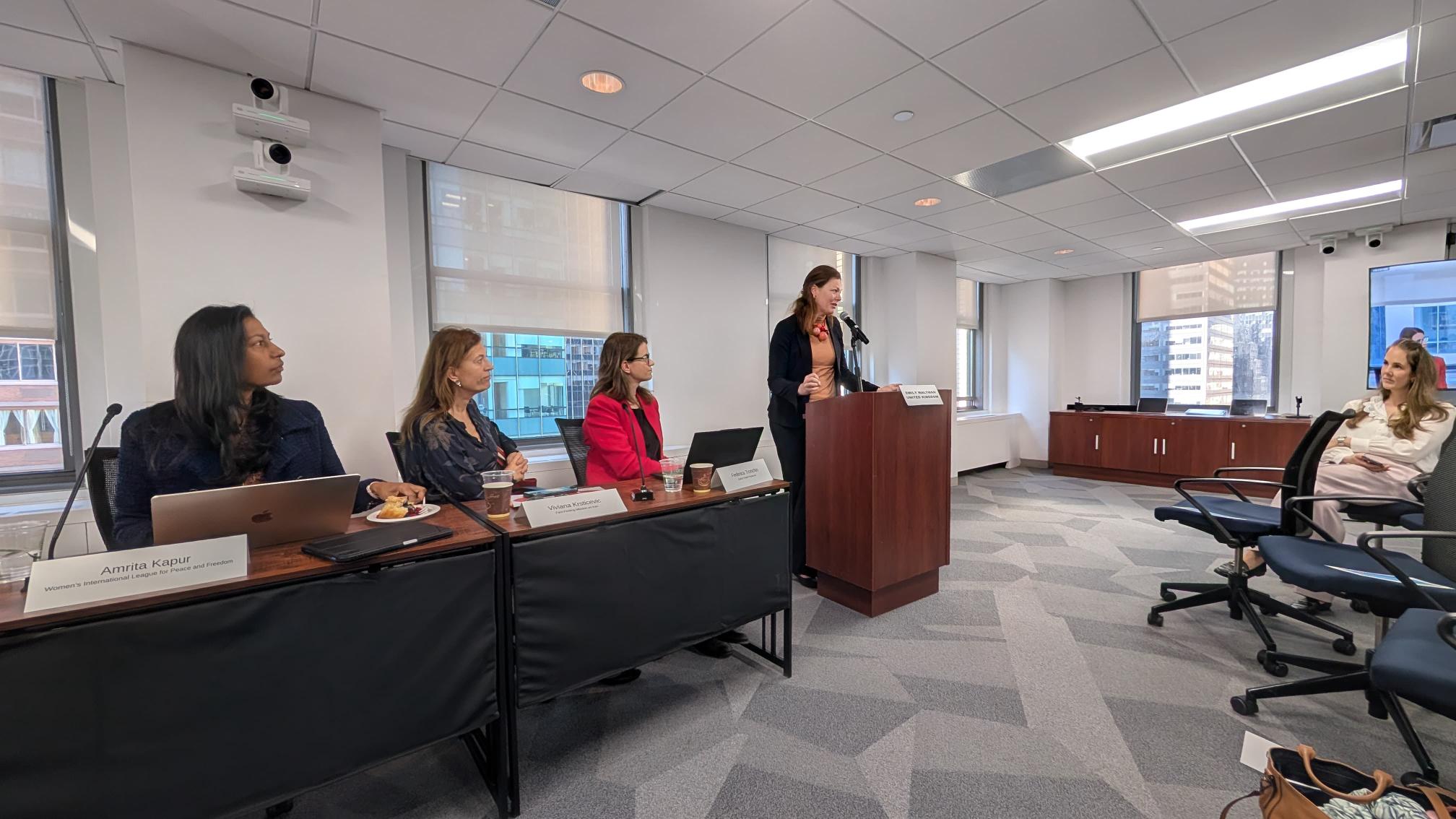
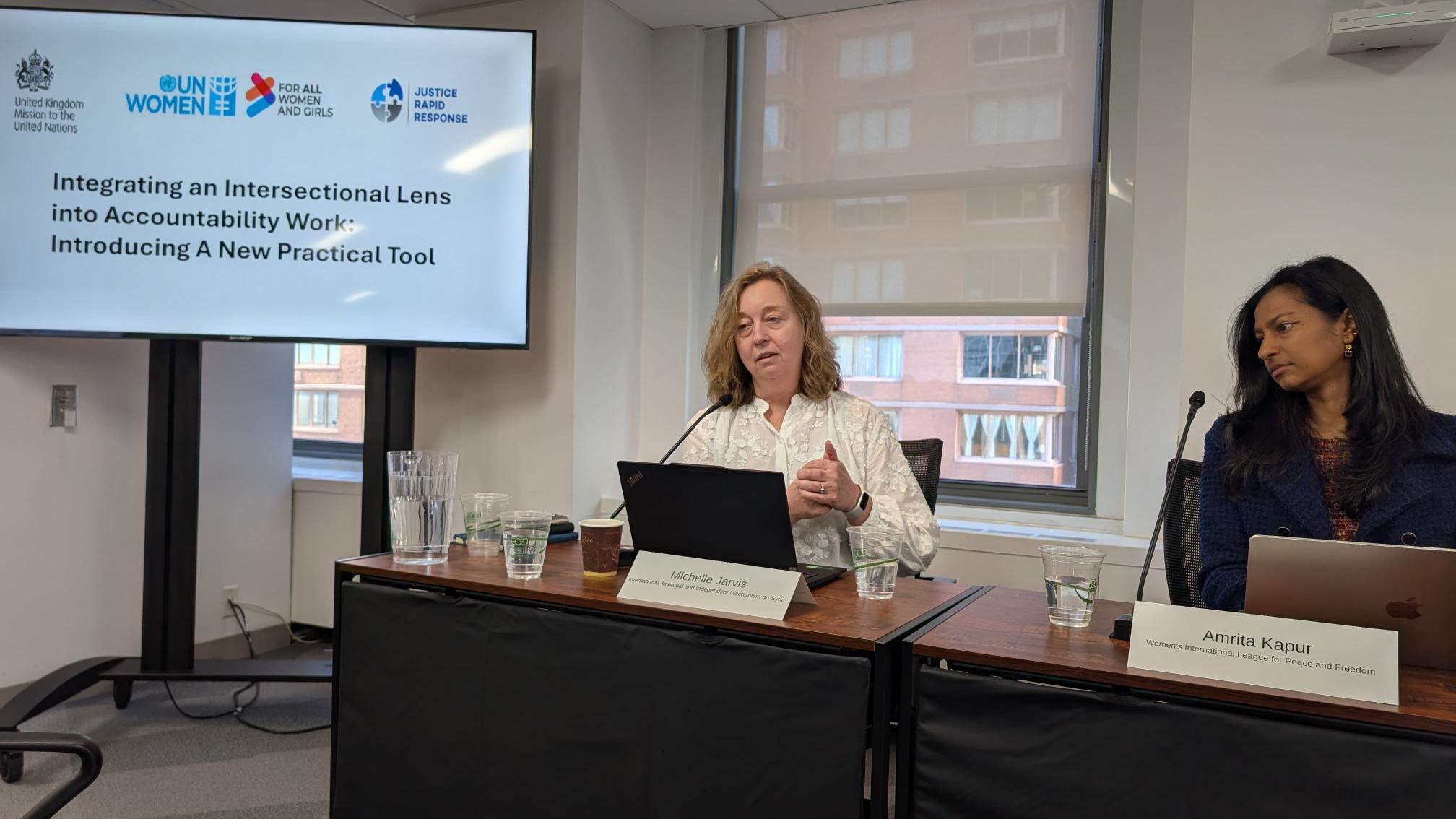
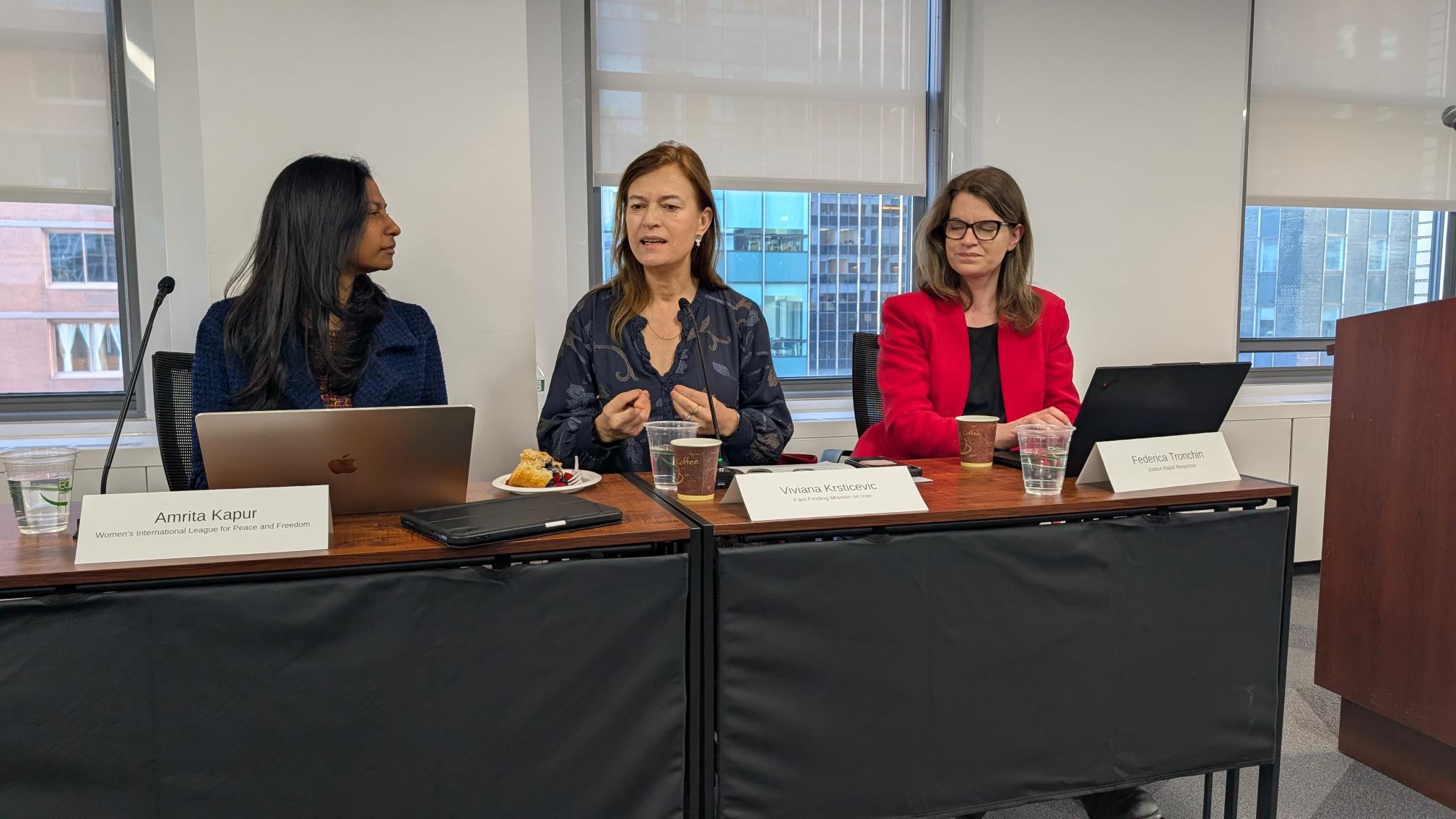
Our panelists in action during the event that took place the UN Women Headquarters in New York on the sidelines of the 70th session of the Commission on the Status of Women.