
Key Takeaways: Screening of Hasta que la vida nos alcance on Colombia’s Transitional Justice Process
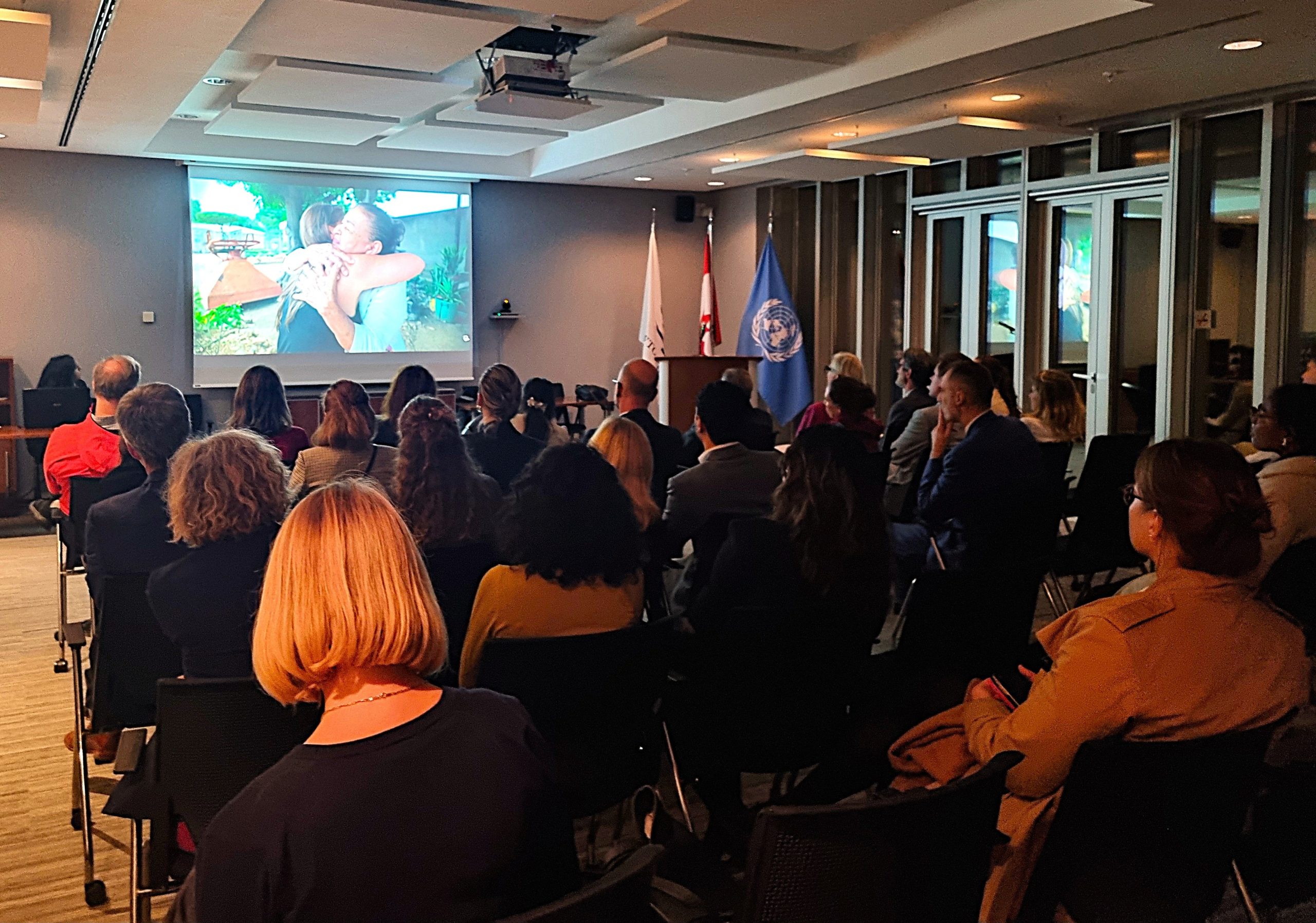
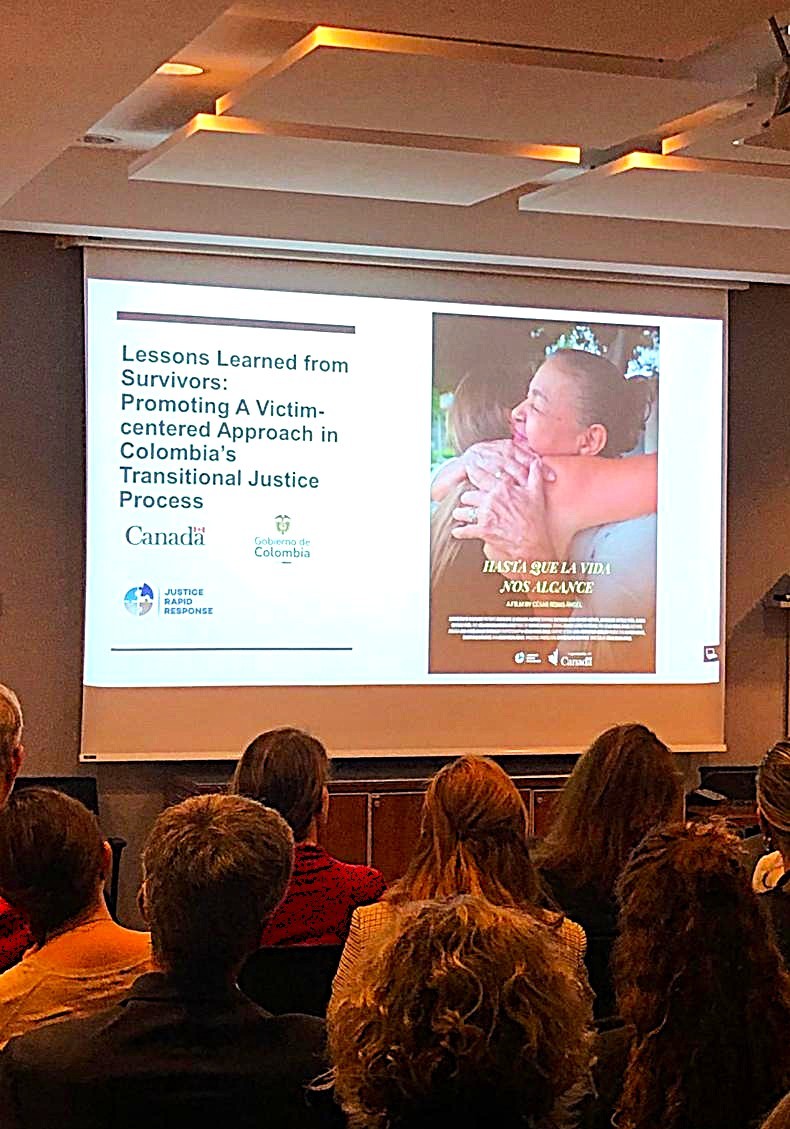
Late October, we had the chance to host, in partnership with the Permanent Missions of Canada and Colombia, a screening event of our new short-documentary film on Colombia’s transitional justice process, Hasta que la vida nos alcance.
We had the chance to have with us as panelists Jacqueline Castillo Peña, a survivor and human rights activist who was featured in our movie, and Judge Ochoa of the Special Jurisdiction for Peace (JEP) who is in charge of macro-case 3 that investigates the extra-judicial killing campaign against civilians that took place in the early 2000’s.
The panel discussion that followed was an occasion to learn more about the challenges faced in the context of the country’s transitional justice process, but also the innovative solutions being implemented to keep advancing towards a true victim-centered justice.
Check out the main takeaways of our panel discussion below :
- The recent decision issued by the Special Jurisdiction for Peace (JEP) in relation to macro-case 3 is of significant importance for the victims and survivors as it contributed to breaking the silence imposed on the victims and addressing the impunity in which most cases remained. For them, having a judicial decision from a State authority recognizing the facts and the harms caused to them is an important step towards justice.
- Perpetrators who have publicly admitted to their crimes gave the relatives of victims some respite and a way to begin a new stage in their grieving process. These public hearings during which perpetrators acknowledge their crimes before the victims’ relatives are part of the JEP’s innovative approach to restorative justice. However, it requires significant preparation work to ensure that this experience does not become retraumatizing for the victims and survivors.
- Before publishing this judgment, a long process of dialogue with the victims and perpetrators was carried out by relying on restorative justice practices contributing to active and lasting healing and reconciliation. It further created the necessary space for victims to voice their demands in relation to truth seeking and for perpetrators to understand the full extend of the harm they caused.
- As a good example of a survivor-centred approach to justice processes, ensuring that survivors and relatives are involved as much as possible in a given process contributes to fostering their sense of agency. For instance, in the context of the search of the remains of victims of enforced disappearances, relatives and family members have been involved all along the search process of Colombia’s Unit for the Missing that recently recovered and analysed, with the help of a JRR Forensic Expert, 18 bodies of individuals that forcibly disappeared.
- By doing so, it secured a survivor-centred approach all along the process. This participatory approach has proven highly valuable, as it not only accelerated the State’s response in the search for missing persons, but also provided families and organizations involved in the search with timely results about their loved ones while building trust.
- Taking concrete steps to find the remains of victims of enforced disappearances, as highlighted by the JEP’s decision in relation to macro-case 3, is of outmost importance to help their relatives start their grieving process and bid them their loved-ones farewell in accordance with their customs and traditions.
- As part of the innovation aspect of the decision, six restorative projects were selected after consultation with all parties, including victims and perpetrators. These projects will be realized by perpetrators and may include the construction of memorialization initiatives, among others. For instance, the JEP selected the project of the Nelson Enrique Romo Romero Cultural House. This House would be built in honour of the son of Neftalina Rosa Romero Guzman and would involve constructing and equipping a cultural center for training, art, memory, and community management with the aim to strengthen the cultural identity of the Afro-Colombian community of the José Prudencio Padilla Community Council in Badillo, Valledupar.
- As another example of restorative projects, and although it is not part of the JEP’s decision in relation to macro-case 3, the collective of women survivors MAFAPO is currently helping design the project of a commemorative park in Bogota that is already being constructed by perpetrators as part of the sanctions that were imposed on them.
- The JEP recognized the importance of the support it received from the international community, including the technical expertise provided by JRR. Over the years, JRR provided expertise in restorative justice, legal affairs, gender, and psychosocial support to numerous partners in Colombia, including the Special Jurisdiction for Peace (JEP), the Unit for the Search of Missing Persons, the Office of the Ombudsman (Procuraduría General de la Nación), the Mayor’s Office of Medellín, and civil society organizations.
JRR wishes to thank Mss. Jacqueline Castillo Peña and Neftalina Rosa Romero Guzmán for sharing their story with us, its partners, the Permanent Missions of Canada and Colombia and the JEP for making this event a success.
This project was made possible thanks to the support of Canada through Global Affairs Canada.
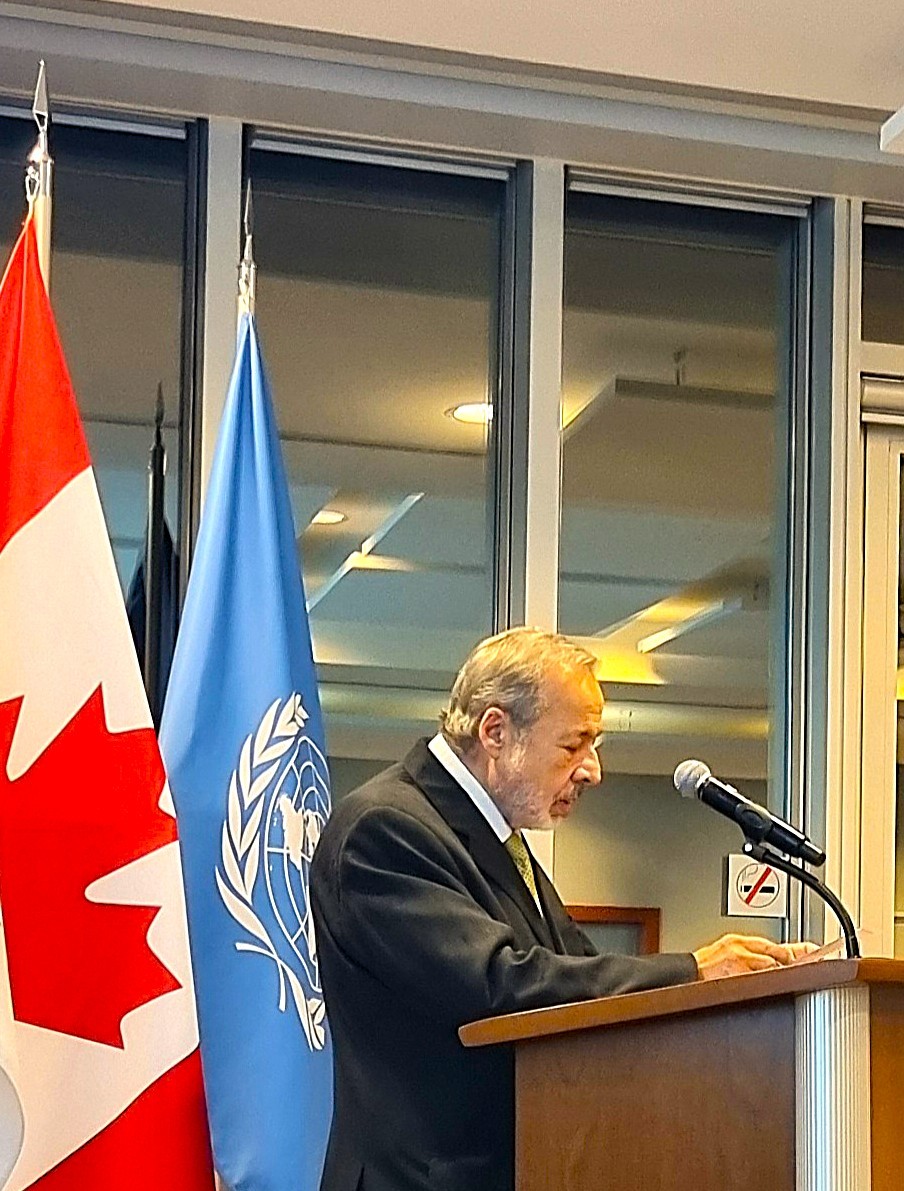
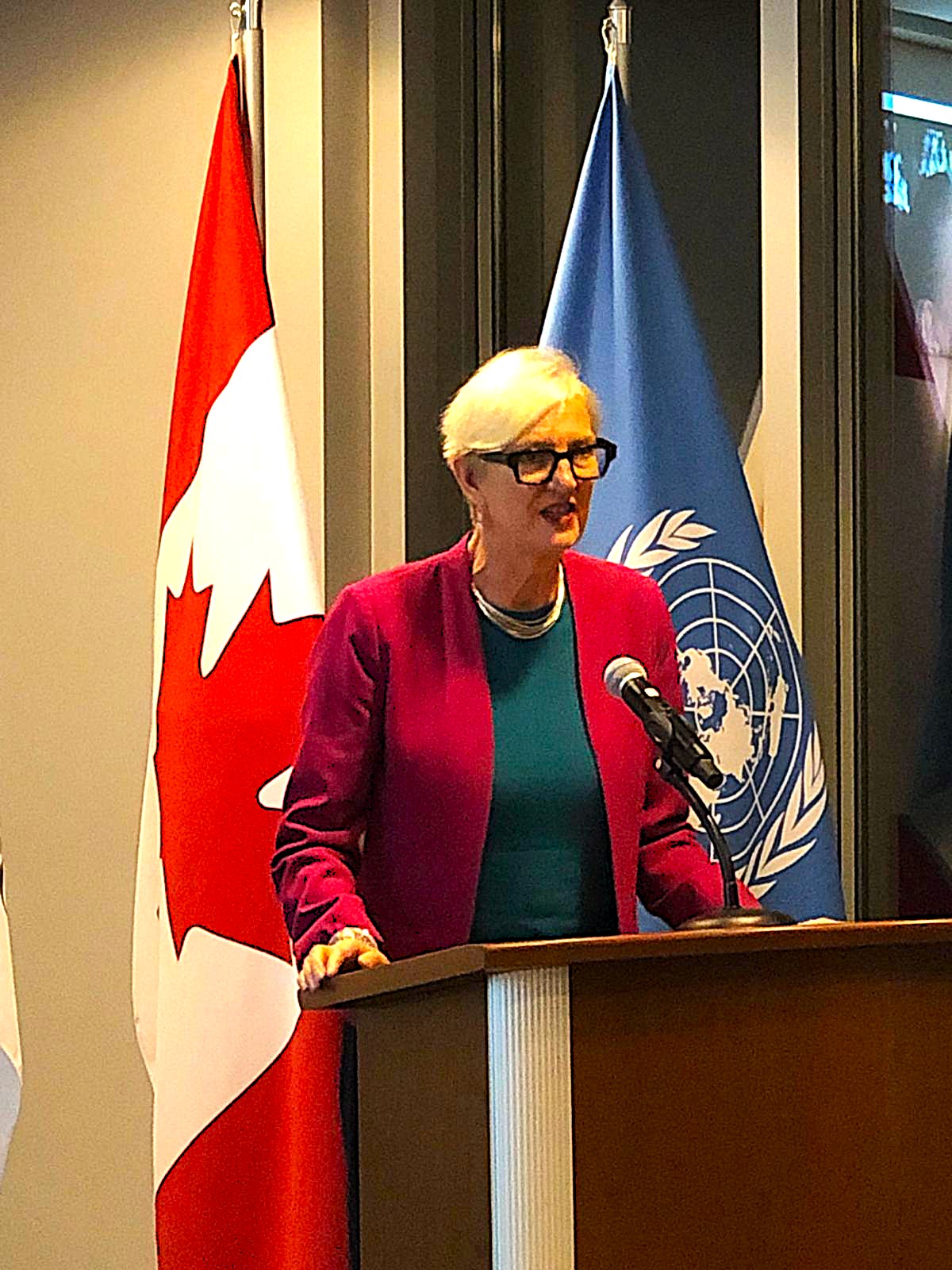
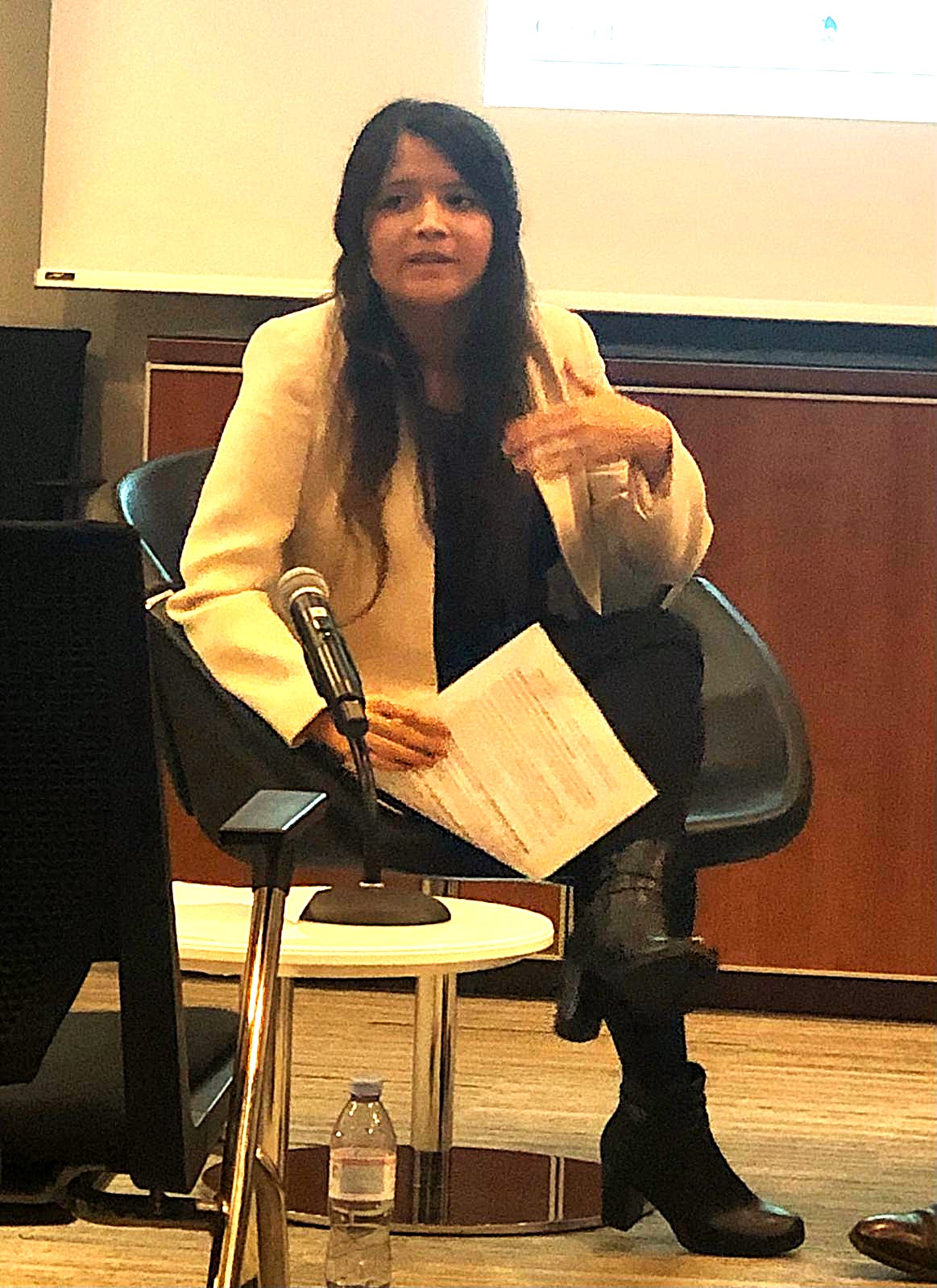
From left to right, the Ambassador of Colombia to the UN, Amb. Gustavo Gallon, the Deputy Permanent Representative of Canada to the UN, Ms. Patricia McCullagh, Ms. Mary Diaz Marquez, Senior Programme Officer at JRR.