
Mainstreaming Restorative Justice Approaches in Colombia’s Transitional Justice Process
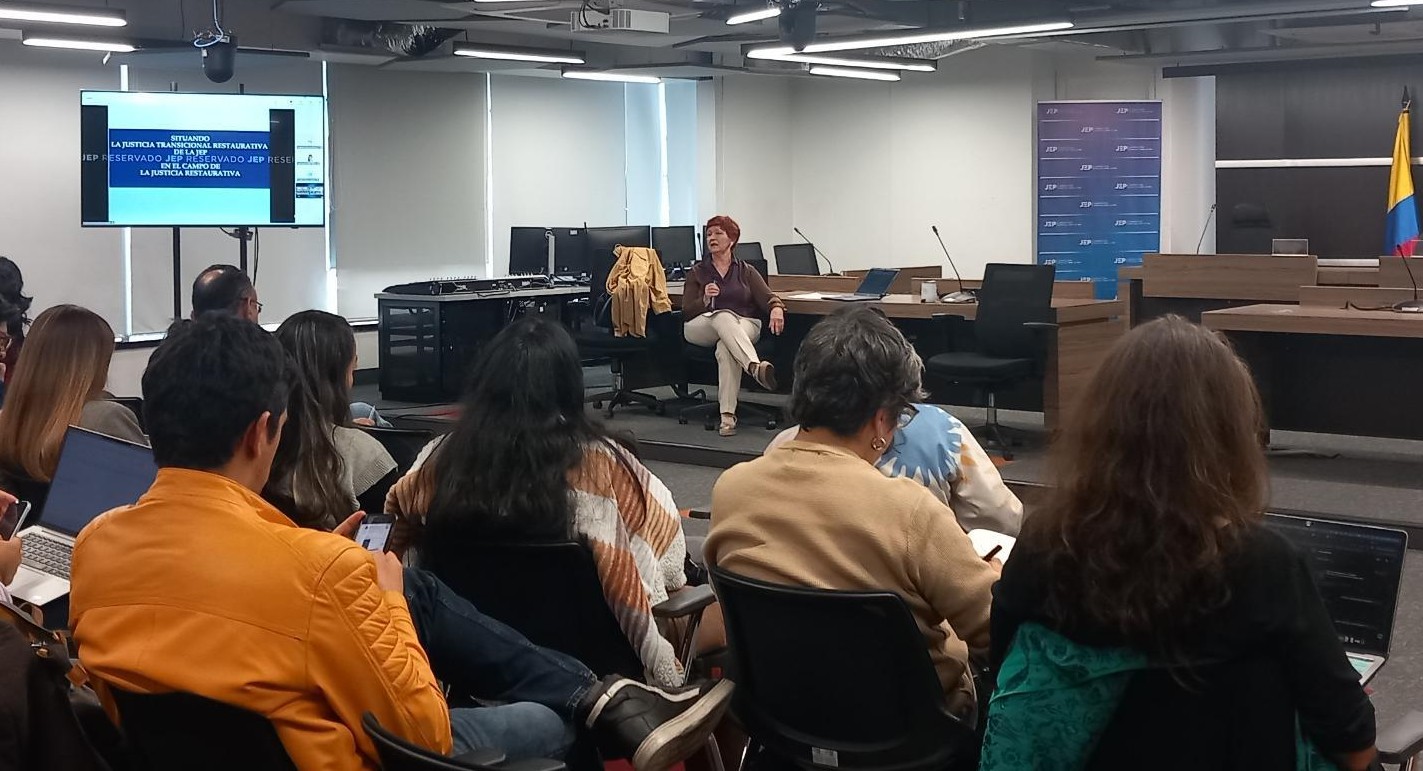
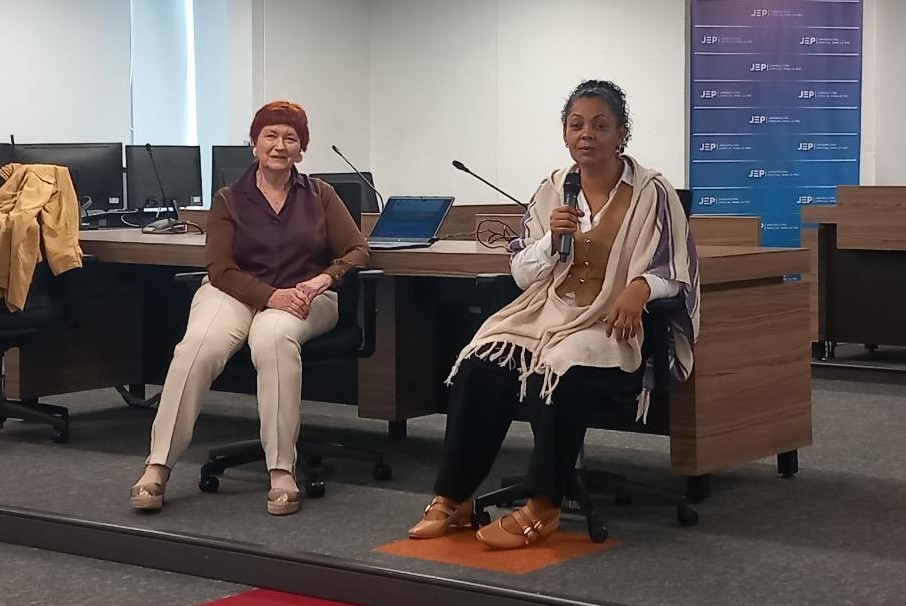
JRR Restorative Justice Expert in action during the event in company of JEP Judge Ana Manuela Ochoa Arias.
Earlier this month, a JRR Restorative Justice Expert participated in an interactive dialogue with judges from the Jurisdicción Especial para la Paz (JEP) to discuss best practices and lessons learned from their recent deployment.
The objective of this gathering was to strengthen the JEP’s capacities in the sector of restorative justice and mainstream the recourse to these approaches within Colombia’s transitional justice process to effectively promote the rights and access to justice of victims and survivors.
These practices may involve conducting consultations and including not only the victims but also the communities where the restorative sanction projects will be implemented. This would ensure that these communities are receptive to the projects while making sure that the transitional justice process also brings broader benefits to the society.
The discussion focused on unpacking the meaning of restorative justice within the JEP, which is understood as a participatory, collaborative, and forward-looking form of justice that aims to address the harm and damage caused to victims during armed conflict. It seeks to reintegrate those back into society and rebuild the social fabric through processes of acknowledgment and accountability.
Multiple teams from the JEP working on different ongoing cases participated in the event, sharing lessons learned about how they have addressed the challenges that have arisen during their investigations, while at the same time seeking to restore victims’ rights. This was the opportunity to create a knowledge-sharing space that made it possible to address critical issues, such as identifying the basic and common stages of restorative processes and determining which of these could be effectively applied by the JEP throughout all the cases it currently handles.
Justice Rapid Response (JRR) has provided expertise since 2014 to help make justice possible for Colombian victims and survivors. Over the years, JRR developed partnerships with key justice actors such as the JEP, the Unit for the Missing, the Procuraduria General de la Nación, the Mayor’s Office of Medellin and civil society organizations.