
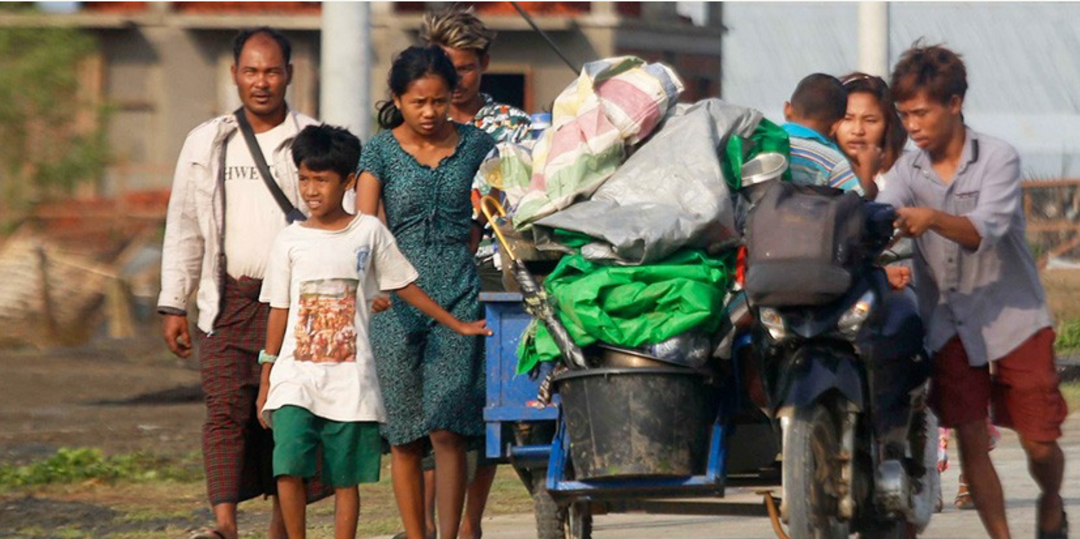
Photo caption: Rohingya people fleeing violence: Photo credit: OHCHR.
For nearly a decade, Rohingya survivors have waited for the international community to recognise the full extent of the atrocities committed against their community. Through their testimonies, advocacy and determination to seek justice, they have helped bring their experiences out of silence and into the international spotlight. The International Court of Justice’s judgment in The Gambia v. Myanmar is a landmark moment in that struggle.
While no judgment can undo the suffering endured or restore what was lost, it represents an important and indispensable recognition of the crimes committed against the Rohingya and a step towards accountability. It also demonstrates what international cooperation, independent investigations and specialised survivor-centered expertise can achieve in the pursuit of justice. Since 2015, Justice Rapid Response (JRR) has promoted these approaches by supporting partners working to document violations in Myanmar and advance accountability. Not the least it also speaks to the impact third states can have, such as the Gambia in this case, to become the legitimate advocate for survivors of atrocities.
In its landmark judgment of 19 November 2026 in The Gambia v. Myanmar, the International Court of Justice (ICJ) found, by nine votes to six, that Myanmar “has committed genocide against the Rohingya group in northern Rakhine State”. It is the first time the Court has found a State responsible for committing genocide. The judgment marks a significant moment for the recognition of the suffering of the Rohingya, and for international justice and accountability, after years of persecution and nearly a decade waiting for accountability.
The case concerned Myanmar’s responsibility under the Genocide Convention for its treatment of the Rohingya, particularly during the military’s 2016 and 2017 operations in Rakhine State. These operations forced more than 700,000 Rohingya to flee to neighbouring Bangladesh, joining a population already displaced by years of discrimination, violence and restrictions on their fundamental rights.
Myanmar denied committing genocide, arguing that its military operations were a response to attacks by armed groups. On November 19, 2026, the Court rejected that defense, concluding that the only reasonable inference from the evidence was an intent to destroy a substantial part of the Rohingya group. This is only the third time the Court has ruled on the merits of whether a State has violated the Genocide Convention.
The crisis has not ended. Since the military coup of February 2021, violence and repression have spread across the country. The military has continued to attack civilian areas, while armed conflict, arbitrary detention, torture, displacement and restrictions on humanitarian assistance have deepened the country’s human rights and humanitarian crisis. Ethnic and marginalised communities continue to face grave violations by all sides, often with few avenues for justice. Accountability for crimes committed against the Rohingya is therefore part of a wider struggle to address decades of impunity in Myanmar, and survivors keep pursuing legal initiatives to build alternative pathways to justice, including through universal jurisdiction.
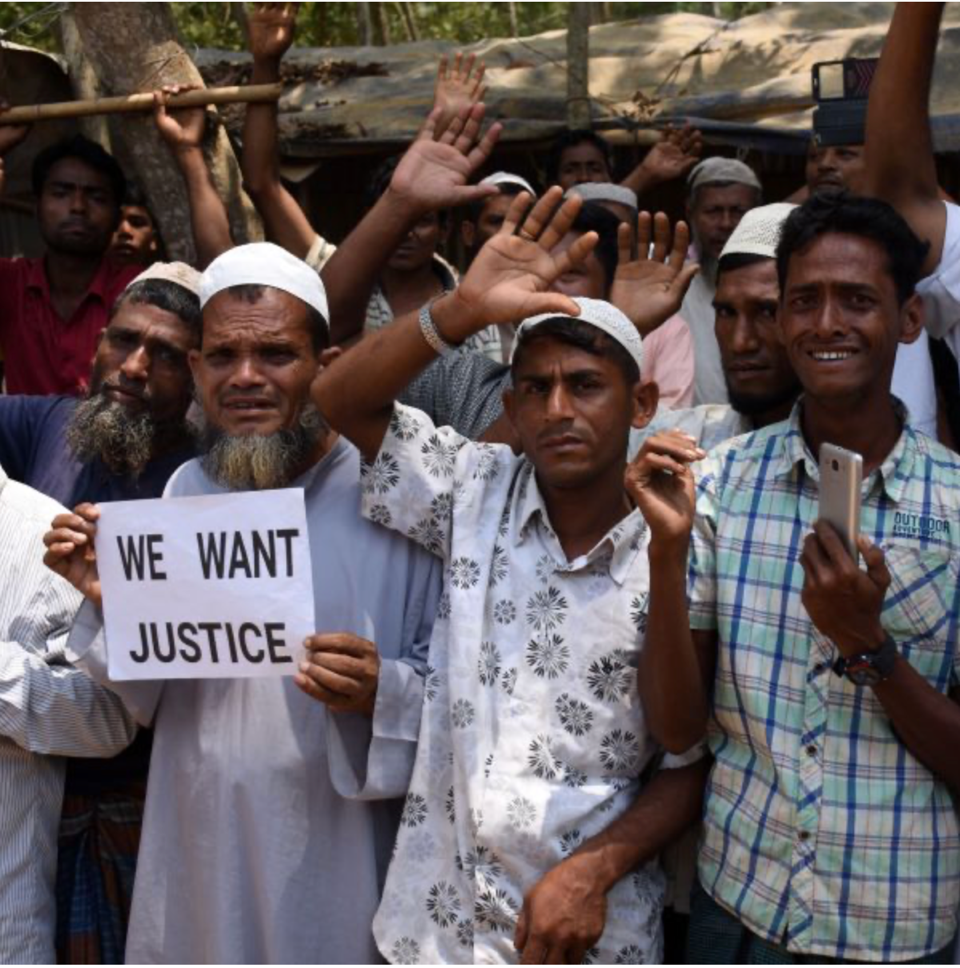
Photo caption: Rohingya people demand justice: Photo credit: UNHCR/Caroline Gluck.
At the heart of The Gambia v. Myanmar was the legal question of how genocidal intent can be established, and evidence of sexual and gender-based violence was central to that question. In the absence of any prior judicial finding, the case rested on the work of those who documented the crimes: UN investigative bodies, civil society organisations, and, above all, the survivors who shared their experiences. Their documentation showed that rape, the targeted killing of men and boys, and other forms of gender-based violence were not isolated incidents, but part of a wider pattern of violence against the Rohingya. The Court found that “gang and mass rape was a notable and recurrent feature of the violence” and that “acts of sexual violence were frequently accompanied by extreme physical brutality”. It held that sexual violence amounted to genocidal acts, including measures to prevent births within the group, and found that the evidence of brutal sexual violence supported an inference of a desire to destroy the foundations of the group. The judgment shows how rigorous, independent documentation of sexual and gender-based violence can help establish both the acts and the specific intent that genocide requires, even before the world’s highest Court and without a prior criminal ruling.
The case also demonstrates the importance of ensuring that investigations into international crimes have access to dedicated gender and child rights expertise, as well as experts trained in survivor-centred approaches: methods that “do no harm”, trauma-informed interviewing, and referral pathways to urgent medical, psychological and legal support. This matters especially for survivors of sexual and gender-based violence, for whom regaining a sense of agency is essential. Giving them a choice over whether, when and how they share their experiences helps restore that agency and avoids retraumatising them. It also helps produce the kind of reliable testimony on which accountability depends.
Since 2015, Justice Rapid Response (JRR) has promoted these approaches by supporting partners working to document violations in Myanmar and advance accountability. Over the years, JRR had nearly 40 experts working in this context, including to international and local civil society organizations, and extensively supported the FFM and the Independent Investigative Mechanism for Myanmar (IIMM) in multiple areas such as with legal and military analysis, child rights, forensic psychology, and gender expertise, to advance justice avenues for victims and survivors.
UN Human Rights Chief Volker Türk applauded the landmark judgment by the International Court of Justice (ICJ) and highlighted the following:
“The UN Human Rights Office, the Independent International Fact-Finding Mission on Myanmar in 2018-2019 and the Independent Investigative Mechanism for Myanmar (IIMM) have repeatedly and consistently, over the years, made abundantly clear the grave concerns of serious international crimes committed against Rohingya and other groups, and the civilian population more broadly in Myanmar. In its sweeping judgment, the Court also pointed to widespread incidents of rape, sexual violence, killing of children, and birth control measures, among other grave violations, used by the military against the Rohingya as part of a genocidal campaign.”
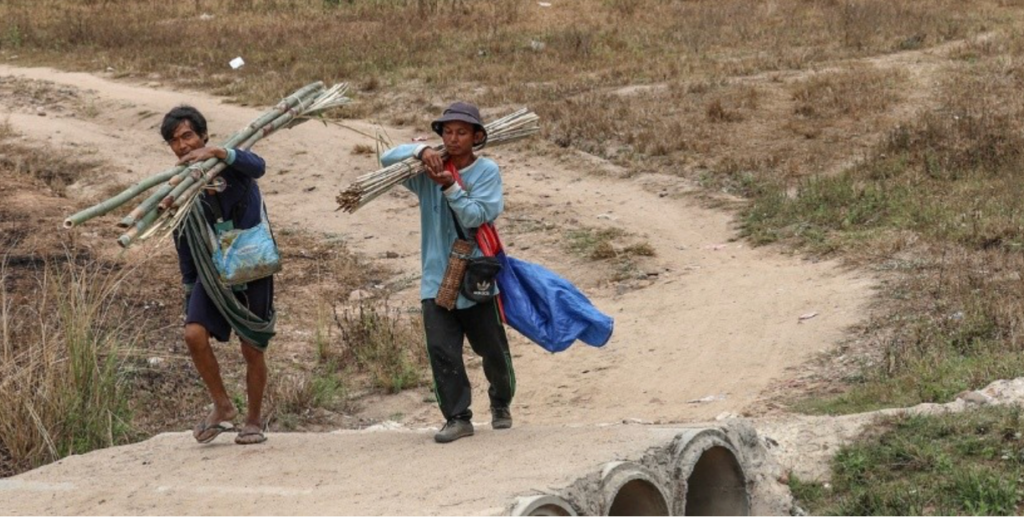
Photo caption: Rohingya people fleeing violence: Photo credit: OHCHR.
Notably, through the partnership between OHCHR and Justice Rapid Response, the FFM benefited from dedicated gender expertise and trauma-informed investigative approaches that strengthened its capacity to document these violations. This judgment is a powerful reminder that investing in specialized gender expertise is essential not only to ensuring that survivors’ experiences are properly documented, but also to advancing accountability and gender justice.
JRR has also supported civil society organisations working directly with Rohingya survivors, with JRR experts contributing to trauma-informed interviews, witness statements, psychological assessments and documentation of SGBV, all of which contributed to information and evidence that was recognized by the court. These efforts form part of a broader accountability ecosystem in which international mechanisms and local organisations play complementary roles in preserving evidence, supporting survivors and pursuing justice.
The Executive Director of the Chin Human Rights Organization (CHRO), Salai Za Uk Ling, stated:
“This is a historic moment for the Rohingya, whose suffering and long struggle for justice have finally received recognition at the highest judicial level of the United Nations. But its significance extends well beyond the Rohingya. For communities across Myanmar who have endured decades of military atrocities, it reinforces something we have always believed: that even the most powerful military institutions cannot remain beyond the reach of international law forever.”
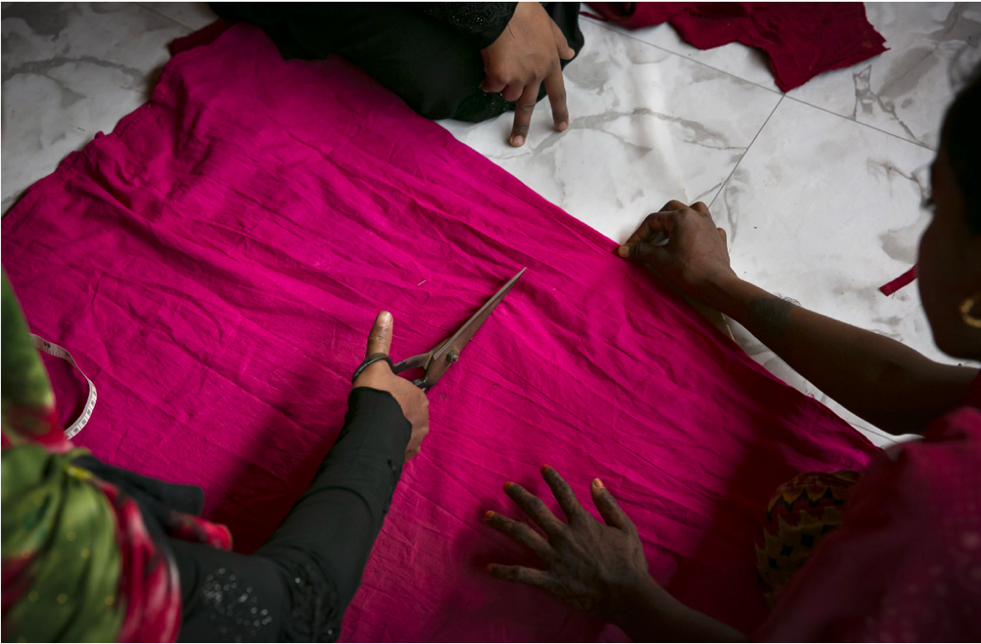
Photo Caption: Women work together on a tailoring project at the Women’s Center in Balukhali refugee camp in Cox’s Bazar on 5 March 2018. Credit: UN Women/Allison Joyce.
For JRR, the judgment is also a powerful reaffirmation of the importance and relevance of the international human rights and justice system. In cases like this, it is the last resort to justice. The case reflects what international cooperation can make possible: States acting on their responsibility to protect, bringing a case before an independent court, UN mechanisms documenting violations, and civil society organisations advocating to ensure that survivors’ experiences are not erased. Notably, The Gambia’s decision to bring this case on behalf of the Rohingya, as a State party not directly affected by the crimes, has led to a finding of genocide and to an order that Myanmar provide reparations to the Rohingya, including by facilitating their safe, voluntary and dignified return. The Court also ordered Myanmar to investigate and, where warranted, prosecute those responsible. It demonstrates that State action, supported by rigorous documentation and the courage of survivors, can advance accountability and open the way to reparations.
Gerald Staberock, Executive Director of Justice Rapid Response, said:
“This judgment puts the suffering of the Rohingya on a historic record, recognises the atrocities committed against them and sets the benchmark for justice and reparation to follow as part of future accountability. Its significance goes beyond the legal determination of genocidal intent: it demonstrates that international justice works and remains relevant in today’s world. The case also highlights the quintessential importance of UN investigative mechanisms, civil society and specialised expertise in the pursuit of justice. In particular, gender expertise and the documentation of sexual and gender-based violence were essential to understanding the nature of the atrocities. JRR is proud to have contributed to these efforts and to advancing justice for the Rohingya.”
The ICJ’s judgment does not, on its own, bring an end to the suffering of the Rohingya or establish the individual criminal responsibility of those who committed the atrocities. However, it represents a significant step towards accountability and provides an important legal foundation for future proceedings.
Ultimately, this case is about more than one judgment. It is about recognizing the suffering of the Rohingya. It is testimony to the relevance of international law offering meaningful protection to people facing the gravest violations. It shows that evidence can be transformed into state responsibility and ultimately accountability, and that States remain committed to the institutions and principles they have collectively established. For survivors in Myanmar, it is not the end but the beginning for the quest for reparations. No doubt, the pursuit of justice will continue and JRR is counting on states and the international community to support its implementation and the delivery of reparations.