
Content warning: this article contains descriptions of extreme violence and serious human rights violations.
The winter night in Kyiv is pitch black, and sparks shoot up through the sky.
They are not shooting stars. They are Russian missiles.

Caption: Russian missiles strike through the Ukrainian night sky. Screenshot from “Surviving Izolyatsia” documentary. Credit: BBC.
A familiar warning sends civilians towards shelters. Yet inside a bomb shelter on a winter Friday night, life continues. Friends play cards. Someone picks up a guitar. A mother reads to her child. Two young people share an unconventional date night.
Russia’s war against Ukraine has brought fear and loss to millions. But it has not stopped people from living, rebuilding and looking towards the future.
For Lyudmila Huseynova and Daniil Bulgakov, resilience has taken another form: turning their experiences of captivity and torture into a fight for those who remain imprisoned, and for survivors’ right to justice.
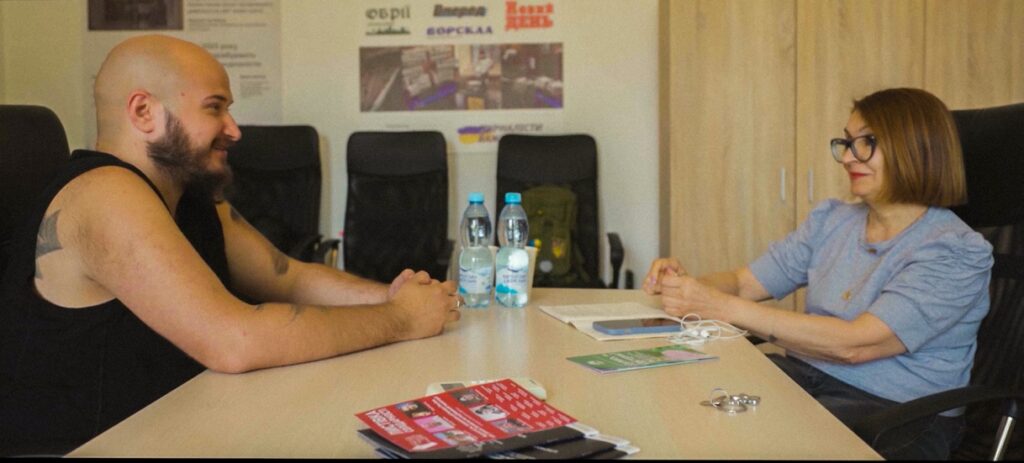
Caption: Lyudmila Huseynova and Daniil Bulgakov, survivors of Izolyatsia, share their experience and path to resilience. Screenshot from “Surviving Izolyatsia” documentary. Credit: Nicolas Braguinsky Cascini and Juan Pablo Aris Escarcena / Justice Rapid Response.
Both are survivors of Izolyatsia, a former cultural centre in occupied Donetsk seized by Russian-controlled forces in 2014 and transformed into a detention centre and military base. The site has become synonymous with systematic torture and unspeakable cruelty, including sexual and gender-based violence against detainees.
For Lyudmila, the ordeal began in October 2019, preceding the full-scale invasion of Ukraine
Aged 63, she had spent years living under occupation and caring for children with disabilities from a disbanded boarding school. One day, she was unlawfully arrested and detained in Izolyatsia.
“I couldn’t see anything outside since I was being held under special conditions. They didn’t let me talk to anyone or find out anything about anyone.”
For Daniil, detention came after he returned to Donetsk in 2019. He was repairing computers and living with his grandmother when armed men arrived at his home.
“I remember it so clearly. It was exactly 10 a.m. I looked at the clock. Just then, the entrance door intercom rang. The voice said ‘police check’. I felt something was off.”
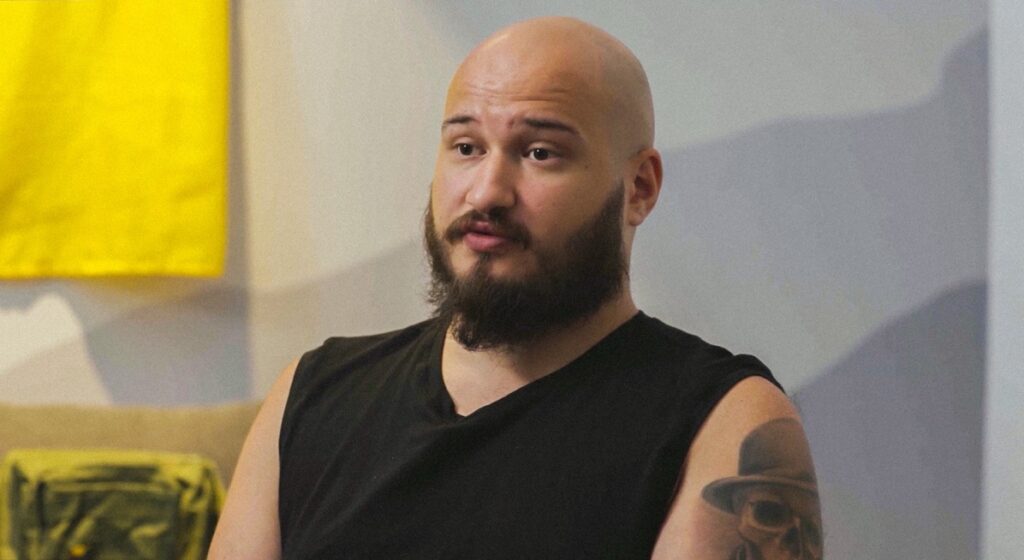
Caption: Daniil Bulgakov, survivor of Izolyatsia, recalls how he was illegally kidnapped and detained. Screenshot from “Surviving Izolyatsia” documentary. Credit: Nicolas Braguinsky Cascini and Juan Pablo Aris Escarcena / Justice Rapid Response.
The men identified themselves as the so-called Ministry of State Security of the Donetsk People’s Republic.
“They knocked me to the floor, turned me over, put a bag over my head, tied my hands behind my back with duct tape, and dragged me down the stairs to a car.”
Both were accused of spying for Ukraine.
A system designed to break people
At Izolyatsia, detention was not simply about confinement. Prisoners were subjected to torture including sexualized torture, overcrowding, deprivation, beatings, forced to stand in stress positions and psychological abuse.
For Daniil, humiliation was woven into everyday life.
“Because of this tattoo I have, this guard ‘Borets’ [Wrestler] gave me the nickname ‘Zek’ [convict]. And at any time of the day, you could hear: ‘Zek! Zek!’”
He remembers interrogations where prisoners were beaten for speaking too loudly, discussing their cases or simply, he says, “for fun”.
During one interrogation, a gag was forced into his mouth while his teeth were filed with a small tool. The pain was unbearable, and Daniil passed out several times. Every time, he was brought back to conscience with cold water. Later, he was stripped naked and photographed. The images were sent to people he knew as a further means of humiliation and intimidation.
Lyudmila recalls being forced to stand for hours with her hands behind her back and a bag over her head.
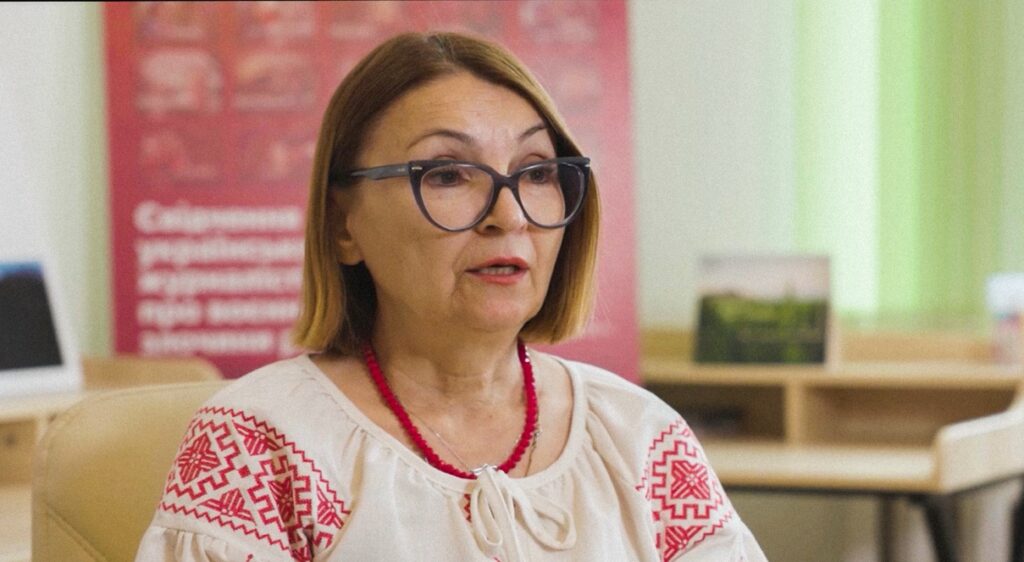
Caption: Lyudmila Huseynova survivor of Izolyatsia, recalls with pain her experience in detention. Screenshot from “Surviving Izolyatsia” documentary. Credit: Nicolas Braguinsky Cascini and Juan Pablo Aris Escarcena / Justice Rapid Response.
“They didn’t let me do anything at all in the first month. Just hands behind your back, standing, a bag over your head.”
These accounts are only a glimpse of the type of abuse suffered. The United Nations has found and documented amongst others systematic sexual violence in detention in Ukraine, including forced nudity, sexual assault, threats of rape, attacks on the genitals and electric shocks. The UN Independent International Commission of Inquiry on Ukraine has identified sexual violence as a recurrent method of torture in detention, including rape and attempted rape, castration and sexual mutilation.[1]
For accountability processes, mechanisms like the UN Commission of Inquiry play a fundamentally important role in collecting, testing, and corroborating information for subsequent criminal investigation and accountability processes. Importantly they support case building for not only individual violations but patterns of conduct, the context in which crimes occurred, and the responsibility of those who ordered, facilitated or committed them.
For survivors, however, providing testimony and participating in the information and evidence process carries a high emotional burden of refacing their trauma.
“Izolyatsia is a torture chamber in Donetsk. And recalling that is still very difficult for me.” Lyudmila Huseynova says with pain.
When survival becomes a mission
The scale of violations and accounts on torture and abuse documented in Ukraine is continuing to emerge. In September 2025, OHCHR reported that Russian authorities had subjected Ukrainian civilian detainees to torture and ill-treatment, including sexual violence, in a widespread and systematic manner. Of 215 released civilian detainees interviewed, the overwhelming majority described torture or other and multiple forms of I ill-treatment.²
For Ukrainian prisoners of war, OHCHR has similarly documented widespread torture and reported that more than half of 60 recently released POWs it interviewed had experienced torture in the form of sexual violence.³
In 2026, the UN Secretary-General’s annual report on conflict-related sexual violence included Russian armed and security forces for the first time in its annex listing parties credibly suspected of committing or being responsible for patterns of rape or other forms of sexual violence.⁴
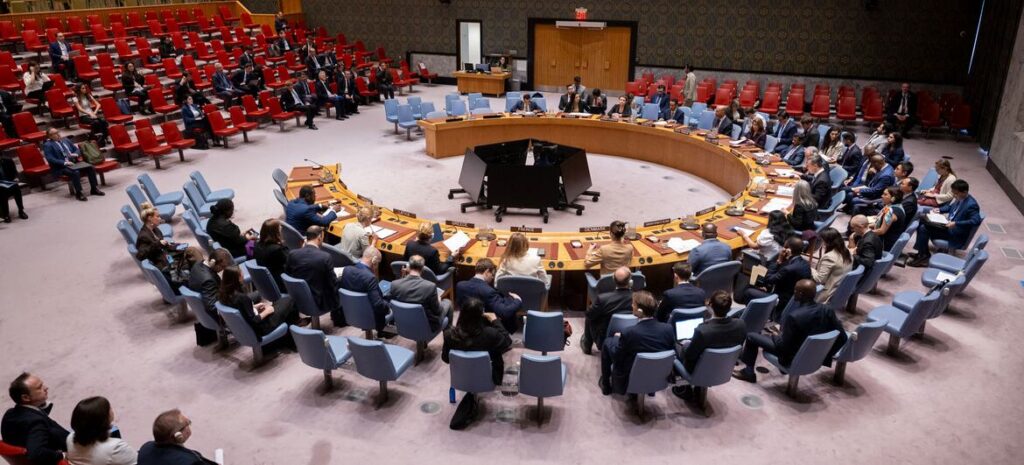
Caption: A wide view of the Security Council meeting on maintenance of peace and security of Ukraine in 2026. Credit: UN Photo/Manuel Elías.
As of 30 September 2026, Ukraine’s Office of the Prosecutor General had recorded 410 cases of conflict-related sexual violence (CRSV) since Russia’s full-scale invasion, affecting 257 women and 153 men, including 26 children. Notices of suspicion had been served on 136 Russian servicemen, while 73 indictments against 91 individuals had been submitted to court. Overall, prosecutors had documented more than 239,000 alleged war crimes and 265,000 crimes related to Russia’s armed aggression.
But international recognition is only one step towards justice.
Violations must be documented. Evidence must be preserved and analysed. Survivors and witnesses must be interviewed safely. Investigations must establish patterns, identify perpetrators, and build cases.
Since 2015, JRR experts have supported OHCHR as well as the Office of the Prosecutor General of Ukraine and (Ukrainian) civil society organisations documenting international crimes. Since its establishment in 2022, the UN Commission of Inquiry on Ukraine has also benefited from the support of JRR experts.
JRR’s experts bring experience in investigations, international criminal law, prosecution, human rights, gender, child rights, digital evidence, and memorialisation.
This expertise is particularly important in cases involving conflict-related sexual violence, where investigators must understand both the individual experience and the wider context in which crimes occurred. JRR has also supported Ukrainian civil society efforts to document and seek accountability for torture including sexualised torture and other war crimes against detained civilians and prisoners of war. The work is technical: interviewing witnesses, assessing evidence, analysing patterns, establishing responsibility, and supporting case-building
Justice Rapid Response provided highly technical expertise from its Roster of justice and human rights experts to support local CSOs in Ukraine, namely the Media Initiative for Human Rights and Human Rights Centre ZMINA supported through the OMCT, to document and report on torture as an international crime committed in the context of the war in Ukraine. The research uncovered similar circumstances of detainees’ arrest and release, including their filtration measures, interrogation scenarios, and torture methods and equipment, which were consistent across different locations and times. Evidence indicates that these were not isolated incidents but rather part of a large-scale and coordinated chain of command and a deliberate policy of the Russian State.
Building a life after Izolyatsia
Behind every piece of evidence is a person.
When Daniil and Luymila were eventually released from Izolyatsia, neither knew how to begin rebuilding a life after captivity.
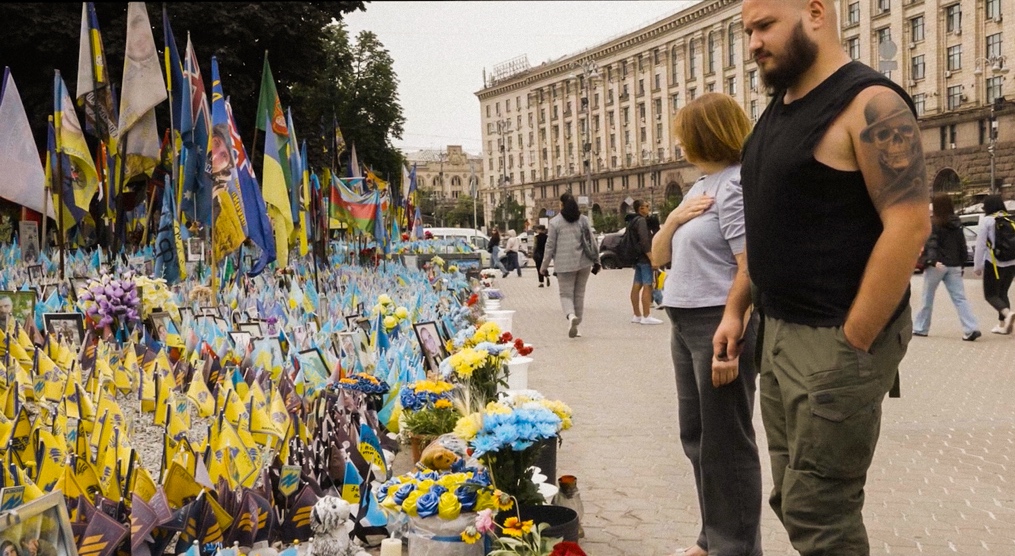
Caption: Lyudmila Huseynova and Daniil Bulgakov, survivors of Izolyatsia, visit a memorial of Ukrainian soldiers killed on the battlefield . Credit: Nicolas Braguinsky Cascini and Juan Pablo Aris Escarcena / Justice Rapid Response.
Lyudmila was fortunate to have friends waiting for her.
“You come out of captivity in dirty clothes, with bedbugs still crawling on you.”
For Daniil, one of the greatest challenges was learning how to live among people who had not shared his experience.
“One of the challenges of former prisoners is simply being able to talk to regular people.”
That realisation became part of his life’s work.
Daniil now supports men who have survived captivity, torture and sexual violence, including through peer-to-peer spaces where survivors can meet people who understand what they have experienced. He also works with families of people returning from captivity and represents “Shlyakh Vilnykh” (Way of Free Men), a Ukrainian public organization and rehabilitation center for civilians who survived Russian captivity and torture.
Lyudmila founded “Numo, Sestry! (Let’s go, Sisters!)”, an organization for women who have survived captivity. Its members have endured torture and sexual violence, as well as the fear of losing loved ones and children. Today, “Come on, Sisters!” brings together more than 80 women who have survived captivity, occupation, torture, and sexual violence. The organization also considers women who are still in captivity to be part of the community it represents.
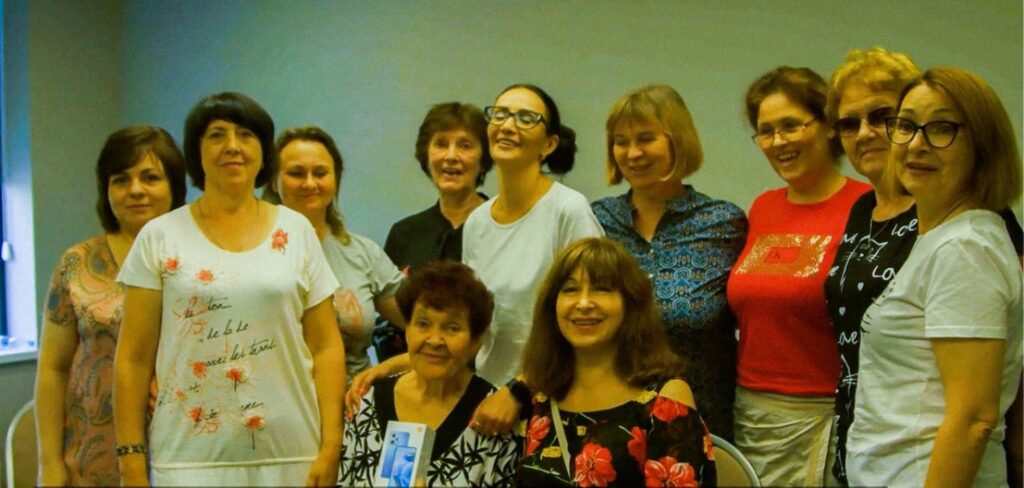
Caption: Lyudmila Huseynova survivor of Izolyatsia, supports female survivors of detention on their path to resilience and recovery. The women are part of the association Numo, Sestry. Screenshot from “Surviving Izolyatsia” documentary. Credit: Nicolas Braguinsky Cascini and Juan Pablo Aris Escarcena / Justice Rapid Response.
For Lyudmila, recovery cannot stop with the individual. One case has stayed particularly strongly with her: a woman arrested when her son was four years old.
“I heard her crying for her child at night. She wasn’t crying like that even when she was being tortured.”
This is why Lyudmila believes it’s essential to “to provide family psychological support to women, men and children that have endured these ordeals.”
“Please don’t forget about us”
Lyudmila remembers another woman who was transferred into her cell. The woman told her that she had no family and nobody to fight for her.
When Lyudmila was released, the woman held her hands, crying and begging her not to forget them.
“I realised that I couldn’t sleep peacefully and live peacefully, knowing how many girls were still there, with no one to fight for them, no one to remember them.”
She made a promise.
“Because oblivion is worse than death.”
Fighting for these women has become Lyudmila’s life’s work.
In 2024, she and other Ukrainian survivors joined SEMA, the Global Network of Victims and Survivors to End Wartime Sexual Violence, bringing survivors together to advocate for justice and change.
For Lyudmila, survivor advocacy is inseparable from accountability. The women she represents are not only victims of what happened to them. They are witnesses, advocates, and agents of change.
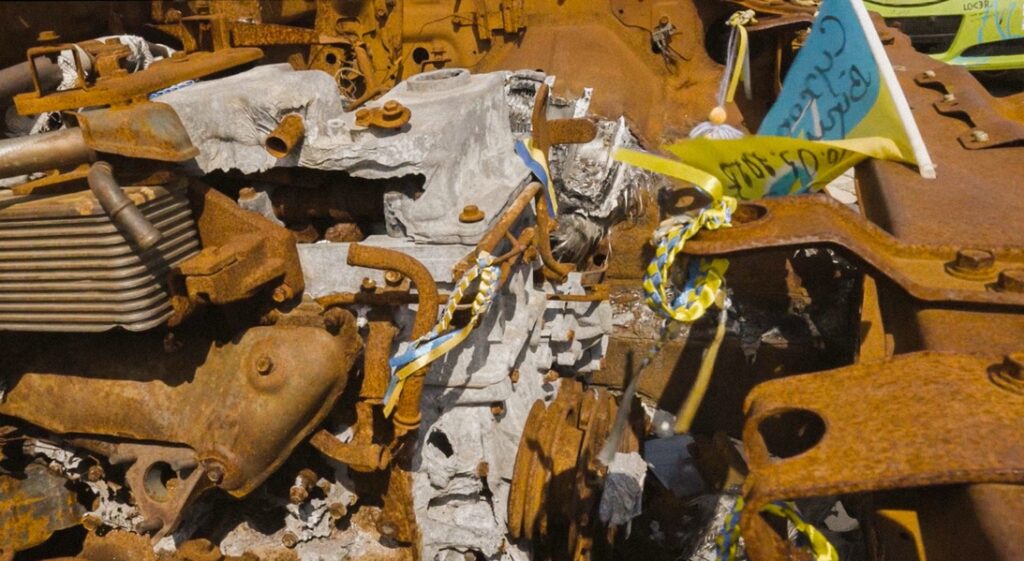
Caption: Ukrainian resilience emblems placed on a destroyed tank. The flag and Ukrainian colors are a symbol of hope, resilience and unity amidst aggression. Credit: Nicolas Braguinsky Cascini and Juan Pablo Aris Escarcena / Justice Rapid Response.
Survival is only the beginning
Some of Daniil and Lyudmila’s former prison mates have remained locked up for years after they were taken.
That is why Daniil continues to support survivors returning from captivity and advocate for those still detained together with “Shlyakh Vilnykh”. Lyudmila continues to lead “Numo, Sestry!”, supporting women survivors and families and keeping international attention focused on those who have not yet returned.
Their lives are still marked by what happened in Izolyatsia. This experience of torture will never fully disappear.But captivity is no longer the only story they can tell.
Their story is also about solidarity. About rebuilding. And about refusing to allow people subjected to torture and sexual violence to disappear into silence. Without planning to, they have become powerful agents for change and accountability, and effectively human rights defenders.
Caption: The sunset over Kyiv symbolises the resilience of its people. Every day and every dawn is a new beginning on the path to recovery and reslience. Credit: Nicolas Braguinsky Cascini and Juan Pablo Aris Escarcena / Justice Rapid Response.
The Surviving Izolyatsia documentary follows Lyudmila and Daniil as they confront their past and continue their search for justice. The documentary gives them space to tell their stories in their own words, while exploring the impact of conflict-related sexual violence, including torture, and the role of justice and accountability in recovery.
Watch Surviving Izolyatsia.
For Lyudmila and Daniil, survival was only the beginning. Their work now is to make sure that those who are still waiting are not forgotten.
For further information on the story, please contact Carlota Nunez Strutt, Communications and Partnerships Officer at Justice Rapid Response: c.nunez@justicerapidresponse.org
Acknowledgements
Justice Rapid Response’s work in Ukraine has been made possible thanks to the support of valued donors and partners, notably the Government of the Netherlands and the Government of Canada.
Through the Netherlands-funded project Strengthening Accountability for International Crimes and Serious Human Rights Violations in Ukraine, JRR supports both international and domestic justice and accountability actors by providing access to specialised expertise, strengthening the capacity of Ukrainian criminal justice and law enforcement officials to investigate and prosecute international crimes, and ensuring that gender-sensitive and victim-centred approaches and international fair trial standards are integrated into these efforts. The project also captures and shares lessons learned and good practices to strengthen future justice and accountability efforts in Ukraine and beyond.
Through the Government of Canada’s Peace and Stabilization Operations Program (PSOP), JRR’s project Strengthening Justice and Accountability for International Crimes and Serious Human Rights Violations in Ukraine through an Inclusive and Gender-Responsive Approach (2022-2026) focused on strengthening accountability for international crimes, including sexual and gender-based violence, through inclusive, gender-responsive and victim-centred approaches. The project enabled JRR to deploy specialised experts to key actors across Ukraine’s justice and accountability landscape, including Ukrainian civil society organisations, international accountability mechanisms and national prosecutors and investigators. The production of the documentary Surviving Izolyatsia was also supported by the Government of Canada through this project.
The documentary Surviving Izolyatsia is a Jusice Rapid Response documentary. The documentary was directed by Nicolas Braguinsky Cascini and Juan Pablo Aris Escarcena, who also wrote the film. Olivier Clavet served as producer, with Lyudmila Heysenova and Daniil Bulgakov as main protagonists. We extend our sincere thanks to Lyudmila and Daniil for sharing their experiences and for their continued work in support of survivors and those still in captivity, as well as to everyone who contributed to bringing their stories to the screen.
Footnotes
1. UN Independent International Commission of Inquiry on Ukraine, Statement by Commissioner Pablo de Greiff to the UN Security Council Arria-Formula Meeting; OHCHR, Report on the Human Rights Situation in Ukraine.
2. OHCHR, Civilian detainees subjected to troubling patterns of torture and ill-treatment since Russia’s full-scale attack on Ukraine, September 2025.
3. OHCHR, UN says Russia continues to torture, execute Ukrainian POWs.
4. United Nations Secretary-General, Conflict-related sexual violence, 2026.
5. United Nations Human Rights Monitoring Mission in Ukraine, Report on the Human Rights Situation in Ukraine, 1 December 2024–31 May 2025, 30 June 2025.
6. United Nations Human Rights Monitoring Mission in Ukraine, Report on the Human Rights Situation in Ukraine, 1 December 2024–31 May 2025, 30 June 2025.
7. Office of the United Nations High Commissioner for Human Rights (OHCHR), Human Rights Monitoring Mission in Ukraine (HRMMU). Sexual Violence in the Context of the Russian Federation Full-Scale Armed Attack against Ukraine. 18 September 2026
[1] Office of the United Nations High Commissioner for Human Rights (OHCHR), Human Rights Monitoring Mission in Ukraine (HRMMU). Sexual Violence in the Context of the Russian Federation Full-Scale Armed Attack against Ukraine. 18 September 2026