
Content warning: this article contains descriptions of extreme violence and serious human rights violations.
After losing loved ones to Colombia’s extrajudicial killings, (otherwise known as the “false positives” scheme), two women have spent years seeking truth, recognition and accountability. Their stories also shed light on the work of women and girl human rights defenders in Colombia, and the significant risks they face because of their gender.
“He was not a guerrilla member”
Neftalina Rosa Romero Guzmán spent years fighting for the recognition of the truth: her son was not a guerrilla member.
Yet the papers, the radio and the national television all blasted her son, Nelson Enrique Romero’s, photo under the headlines “Three armed guerrilla members, killed in combat.”
Neftalina’s son, Nelson Enrique Romero was only 30 years old when he was extrajudicially killed. He was Afro-Colombian, lived in La Paz, César, a mountainous village in the North of Colombia, and he worked in construction, hunting and agriculture. On a day like any other, on 25 May 2003, Nelson went into a shop with some friends and never came out again.
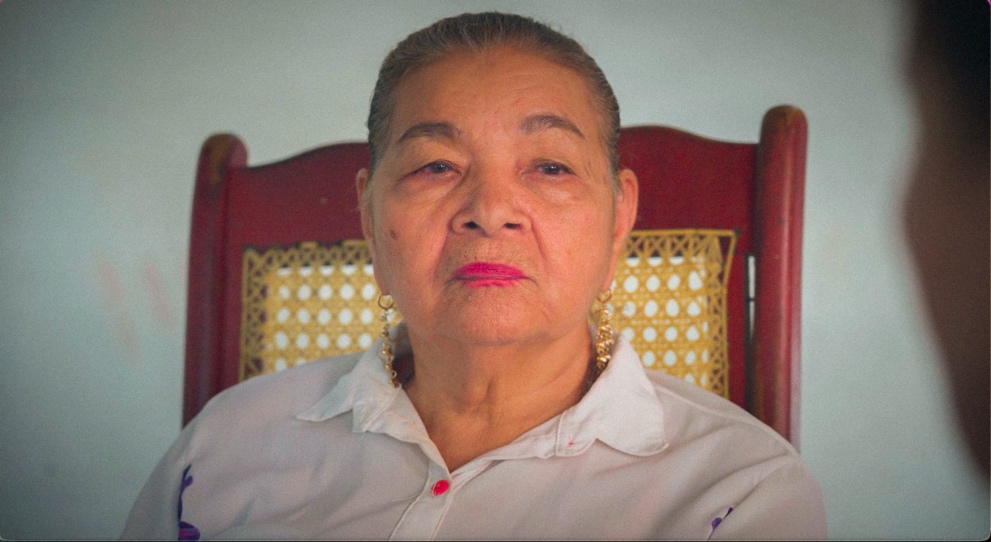
Caption: Neftalina Rosa Romero Guzmán, mother of Nelson Enrique Romero, who was killed by the Colombian army in the case of the “false positives”. Photographer: César Rojas Ángel / Justice Rapid Response.
Witness testimonials would later reveal how armed men had suddenly entered the shop and violently dragged Nelson and the other men away.
The shopkeeper, who would later flee Colombia after speaking about what she had witnessed, recalled that the men tried to force Nelson to sign a document admitting he was a guerrilla fighter.
Nelson refused.
He told the armed men that he was not a guerrilla member, and that his family depended on him, so he could not sign that document.
The soldiers proceeded to beat Nelson until they knocked out all of his teeth. Then they shot him as he tried to run away.
That night, the shopkeeper who witnessed the violence saw the army vehicle again. She said Nelson’s body was tied to the back of the van, and it was being dragged along the dirt road for everyone to see.
The soldiers were bragging out loud about how they had killed guerrilla members today. Then they went out to get drunk in town and celebrate.
None of what occurred was an accident or a coincidence.
This was part of an extrajudicial killing scheme orchestrated by the Colombian army called the falsos positivos. In Colombia, the falsos positivos scheme refers to the killing of thousands of civilians by members of the armed forces, who falsely presented them as guerrilla fighters killed in combat, often to inflate military success figures.
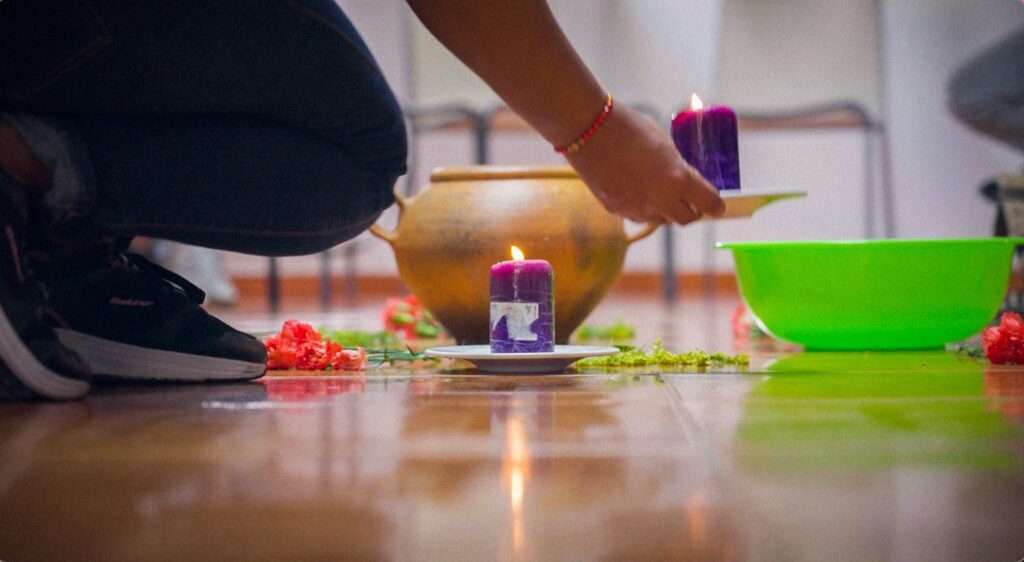
Caption: A memorial to the victims of extrajudicial killed in the “false positives case”. Photographer: César Rojas Ángel / Justice Rapid Response.
Neftalina only learned about what had happened to her son Nelson through another one of her sons, who happened to be serving in the army. When her son in the military went to enquire about any news on the whereabouts of his brother, the soldier who had shot Nelson reportedly admitted that he had been given 300,000 Colombian pesos (around US$130), lunch and a week of leave to shoot Nelson.
The reported payment was not an isolated detail. Investigations by Colombia’s Special Jurisdiction for Peace (JEP) have uncovered a wider system of financial and institutional incentives that helped sustain the false positives scheme. Military personnel faced pressure to demonstrate operational results, while rewards and benefits were offered for reporting deaths in combat. These included financial payments, days of leave, promotions, decorations and other professional advantages.
In some regions, civilians were also recruited and paid to identify, deceive or deliver victims to military personnel. In its investigation into crimes committed by the Army’s Fourth Brigade in Antioquia between 2004 and 2007, the JEP identified a criminal network involving civilian recruiters who handed victims over to soldiers in exchange for money.
In Casanare, the JEP also documented the use of more than 140 million Colombian pesos in public funds to finance criminal activities linked to the false positives scheme.
For years, Nelson’s death was recorded as a combat killing.
For his mother, the injustice did not end with his extrajudicial killing.
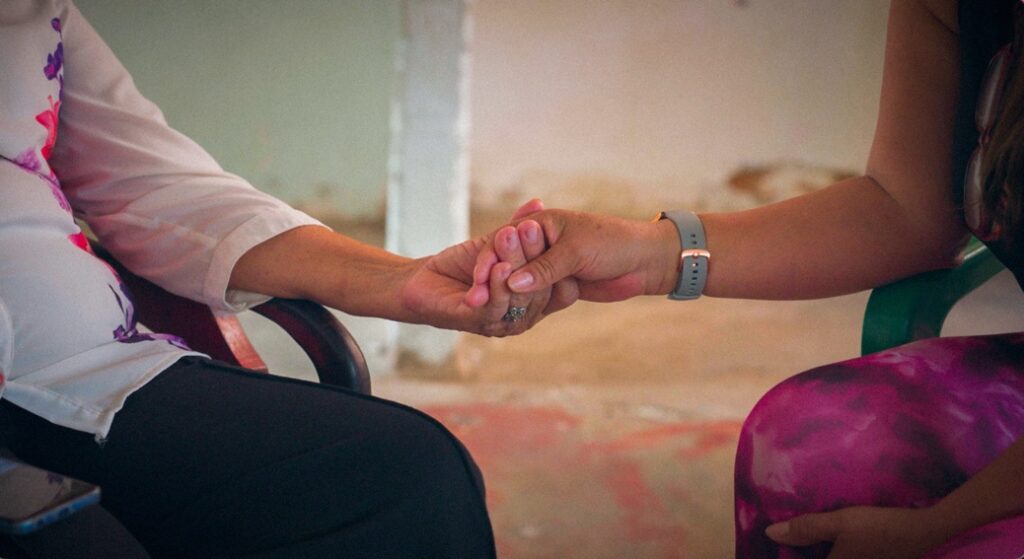
Caption: Finding resilience in times of deep pain and distress. Photographer: César Rojas Ángel / Justice Rapid Response.
Neftalina’s experience reflects a reality faced by many women who have lost their loved ones: the work of demanding truth and recognition often continues long after the original violence.
Furthermore, extrajudicial killings have gendered dimensions beyond the seeking of transitional justice: they also shape family relationships and force women to take on roles as the sole breadwinner in families, all while navigating grief and the justice system.
A country searching for the truth
Nelson was one of thousands of civilians killed during Colombia’s armed conflict and falsely presented as guerrilla members killed in combat.
Between 2002 and 2008, this practice, known as falsos positivos, became widespread. People, often from economically and socially vulnerable communities, were sometimes lured away with promises of work.
Then they were subsequently killed by members of the security forces and their deaths falsely recorded as combat casualties. In many cases, enforced disappearance was part of this same pattern: victims were taken away, their whereabouts concealed or their bodies moved or misidentified, leaving families without answers about what had happened to their loved ones. Some relatives only discovered the truth when bodies were eventually located or identified.
The killings and disappearances served to inflate military operational results and create the false impression of success in the fight against armed groups.
The scale of these extrajudicial killings was enormous.
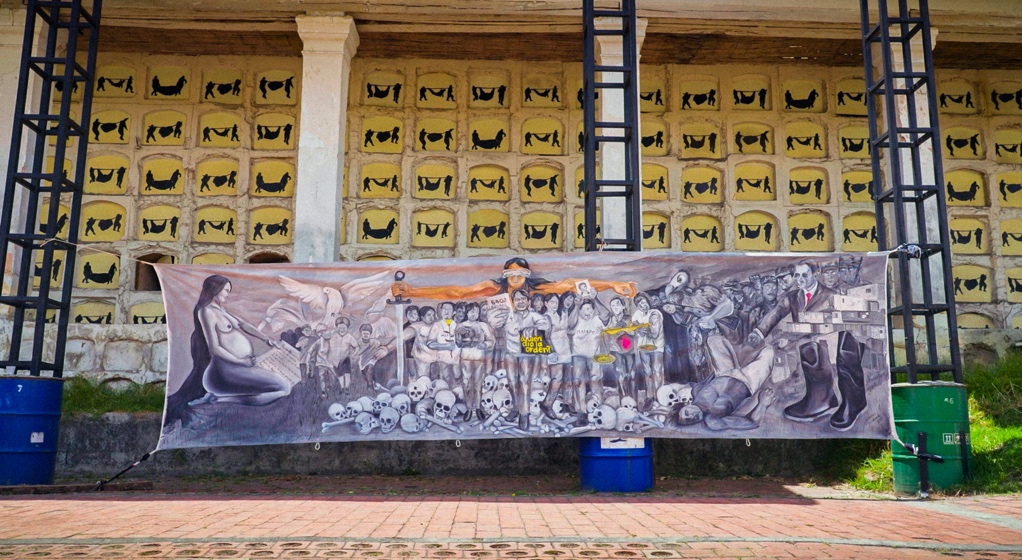
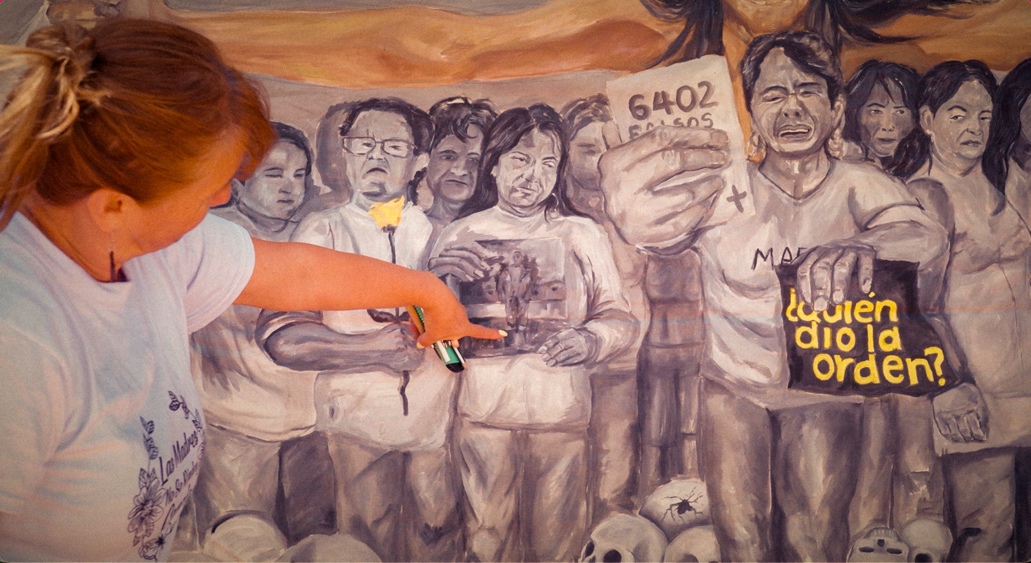
Caption: An outdoor mural memorial to commemorate the victims of the “false positives” cases. Photographer: César Rojas Ángel / Justice Rapid Response.
The Special Jurisdiction for Peace, or Jurisdicción Especial para la Paz (JEP), identified 6,402 official victims of these extrajudicial killings between 2002 and 2008.In November 2026, following seven years of investigation, the JEP published new findings from its national investigation into Case 03. It established that 2,702 people had been killed and falsely presented as combat casualties between January 2002 and December 2008, across 1,625 criminal events. A further 44 people survived these events.
Separately, the JEP’s Information Analysis Group documented 7,961 victims by name between 1990 and 2016, drawing on the integration and verification of official and non-governmental databases, 1,018 reports submitted to the JEP and 801 voluntary testimonies.
These findings demonstrate both the scale of the crimes and the importance of continued investigations to establish the full truth about what happened to victims and their families.
While these official figures include those murdered in extrajudicial killings, the full scale of those affected by the conflict goes beyond these numbers: as the UN Working Group on Enforced or Involuntary Disappearances has highlighted, when families are left to shoulder the responsibility of searching for their loved ones, the process can compound the harm they have already suffered[1]. The financial, psychological and physical costs of searching can push households into poverty, while stigmatisation may compound their suffering by denying the experiences of the disappeared and those who seek answers.
Colombia’s justice process is now looking at these deaths under its macro-case model, where the JEP investigates patterns of crimes, the structures that enabled them and those most responsible.
“I couldn’t let him disappear like that”
Jacqueline Castillo Peña remembers the moment she learned that her brother Jaime Castillo Peña’s body had been found in the Ocaña morgue.
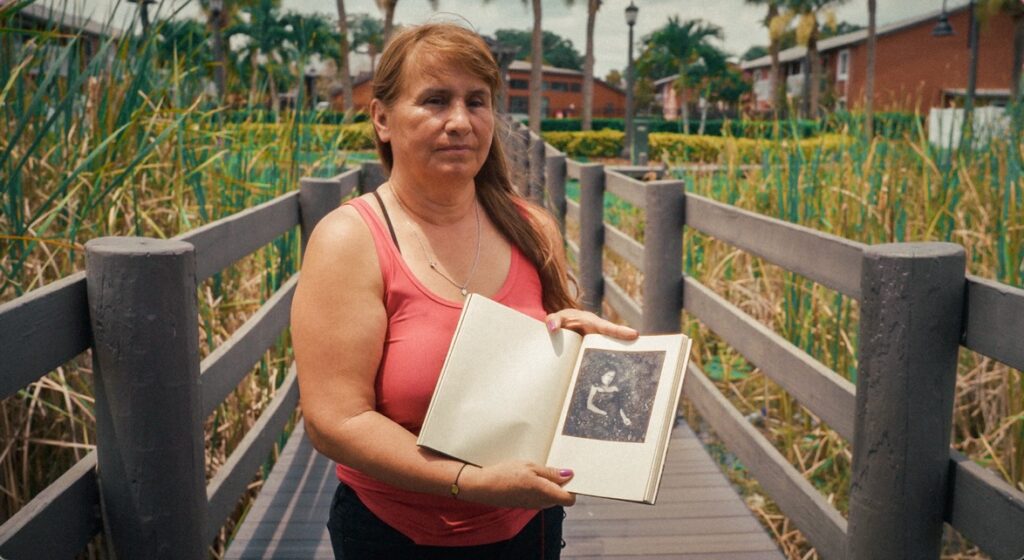
Caption Jacqueline Castillo Peña, sister of Jaime Castillo Peña, who was extrajudicially killed by the Colombian army in the case of the “false positives”. Photographer: César Rojas Ángel / Justice Rapid Response.
For eight days, Jaqueline had searched for answers when her brother Jaime Castillo Peña never came home.
Then, when he was found dead, Jacqueline travelled to Ocaña to retrieve his body. Jaime’s body had been labelled as guerrilla member killed in combat.
“I knew we were going to face an incredibly difficult experience and put our lives at risk,” Jaqueline says. “But I couldn’t let him disappear like that.”
Jacqueline Castillo Peña decided to sue the State.
Speaking publicly about Jaime’s case brought Jacqueline and her family many threats.
Jacqueline eventually took her children out of Colombia and continued her fight from abroad.
Her experience illustrates how the consequences of violence can extend beyond the person directly killed. For women who take on the search for truth, pursuing accountability can expose them and their families to new risks. The threats Jacqueline faced were not simply an extension of the original crime: they were also connected to her decision to step into a public role demanding accountability.
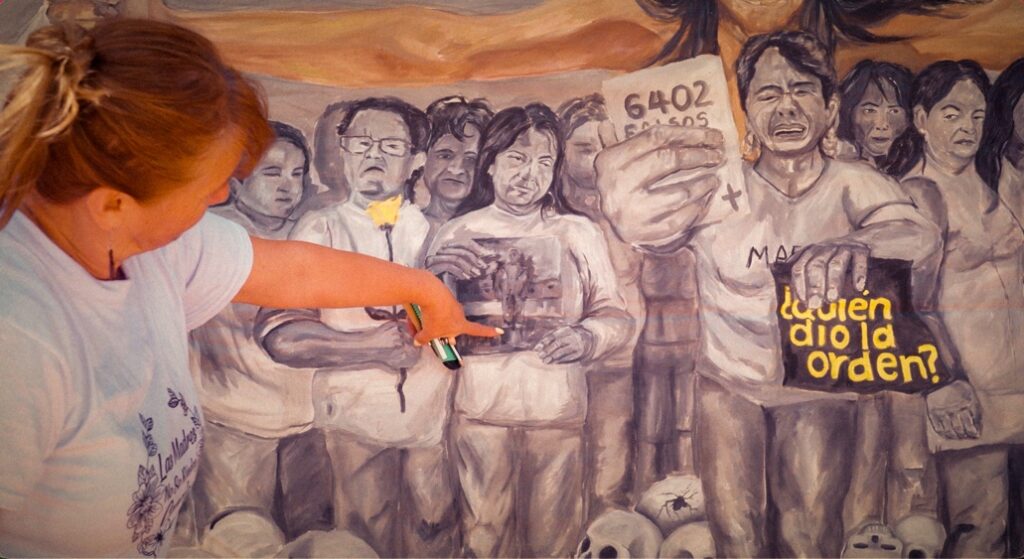
Caption: An outdoor mural memorial to commemorate the victims of the “false positives” cases. Photographer: César Rojas Ángel / Justice Rapid Response.
When Jacqueline Castillo Peña returned, she found other women who had experienced the same devastating loss.
Their loved ones had been taken away, often without explanation or information about their whereabouts. Many had been killed and their bodies subsequently concealed, moved or presented as those of guerrilla fighters killed in combat. Families were left searching for answers, sometimes not knowing whether their relatives were alive or dead.
In 2008, the women came together to form MAFAPO, Madres de Falsos Positivos.
What began as individual grief became a collective movement led largely by mothers and other mothers and other women who have lost their loved ones.
In coming together, these women turned a role often associated with private mourning and caregiving into one of public advocacy, truth-seeking and resistance.
“When we uncovered the facts of these forced disappearances, I think we saved many lives,” Jacqueline says. “Because we prevented more disappearances from happening.”
The gendered dimensions of threats to human-rights defenders
Once a person disappears, there is a double impact: on the disappeared victim, who is removed from the protection of the law, and their families, ignorant of their fate of their loved ones, waiting for news that might never come, and often facing poverty, including because of the loss of income, inheritance rights, and expenses related to the search.
Under Article 24(1) of the International Convention for the Protection of All Persons from Enforced Disappearance, a victim is defined as the disappeared person and anyone who has suffered harm as a direct consequence of the disappearance. Jaqueline Castillo Peña and Neftalina Rosa Romero may therefore be recognised as victims in their own right. Article 24 also establishes victims’ rights to truth and reparation, and requires States to address the legal situation of disappeared persons and their relatives, including in relation to economic matters and property rights.
For the women who have spent years seeking truth for their relatives, the violence did not end with the killings. Their search for justice has itself exposed them to threats, intimidation and other forms of violence.
The UN Special Rapporteur on human rights defenders has highlighted that women who speak out against human rights violations in Colombia face particular risks because of their gender identity. These include threats and attacks involving gender-based violence, attempts to discredit or intimidate them, and harassment targeting their families. Women from MAFAPO, who publicly demand justice for relatives killed in the falsos positivos cases, have also faced these dangers. Their experiences show that women seeking justice can become targets themselves, simply because they refuse to remain silent.
Women who challenge established narratives or take on public leadership roles can be portrayed as transgressing traditional expectations of women and mothers, while those seeking protection or justice may face further revictimisation.
The UN Committee on the Elimination of Discrimination against Women has likewise expressed concern about the deliberate targeting of women defenders working to obtain reparations for victims[2], and about discriminatory and revictimising treatment when they seek protection. For women such as Jacqueline Castillo Peña, who received threats after publicly pursuing her brother’s case, and the mothers who came together through MAFAPO, the pursuit of truth therefore carried its own risks. Their experiences show how gender can shape not only the violence suffered by victims, but also the dangers faced by those who continue to demand accountability on their behalf.
A restorative justice that looks beyond the crime
The Special Jurisdiction for Peace (JEP) was created under Colombia’s 2016 Peace Agreement with the FARC-EP to address the most serious crimes committed during the conflict.
The JEP’s investigations have established that the crimes were facilitated by a system of pressure from military commanders to produce operational results, alongside incentives and rewards for reporting combat casualties. The practice was sustained by failures of oversight, tolerance of abuses and the concealment of crimes within military structures.
The JEP’s purpose is not simply to determine who committed a crime.
It seeks to establish the truth, identify those most responsible, recognise victims, provide reparations and contribute to guarantees of non-repetition.
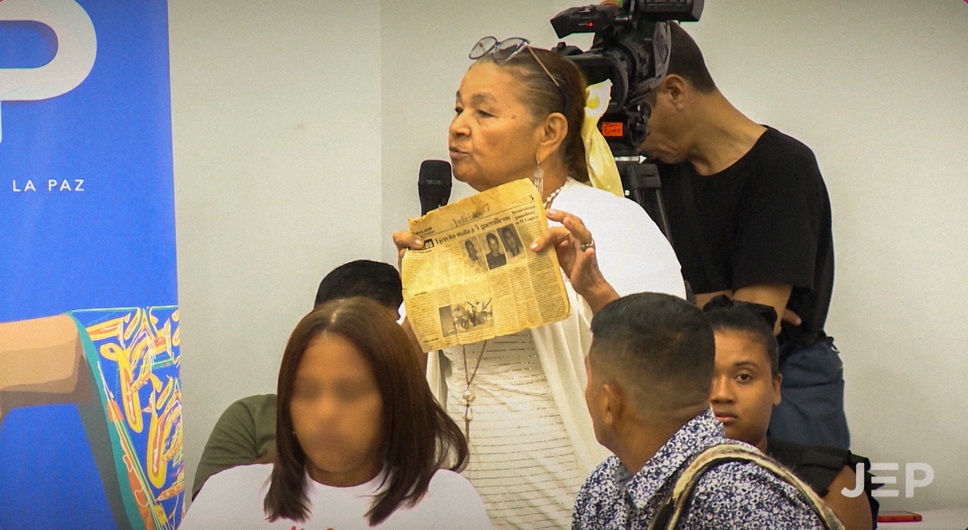
Caption: Neftalina Rosa Romero Guzmán, mother of Nelson Enrique Romero, seeks justice for her son in front of the Jurisdicción Especial Para la Paz (JEP). Photographer: César Rojas Ángel / Justice Rapid Response.
And it has introduced an important idea into the justice process: restoration.
For victims, justice can mean more than seeing a perpetrator punished. It can mean having their experience recognised, participating in decisions about the potential restorative sanctions, which would take the form of projects aimed at providing reparations to victims and seeing the harm caused to their families and communities addressed.
This broader understanding of harm is particularly important when looking at the experiences of women relatives of victims. The consequences of a killing do not stop with the loss of an individual. They can reshape family responsibilities, livelihoods, relationships and community life, while placing women who take on the search for answers in positions of increased public and personal risk.
This requires specialised expertise.
Since 2014, Justice Rapid Response (JRR) has supported national justice actors and civil society in Colombia through 98 deployments, bringing expertise in international criminal law, investigations, criminal analysis, victim participation, restorative justice, psychosocial support, witness protection and sexual and gender-based violence. At the international level, JRR deployed reparations and psychosocial expertise to the Inter-American Commission on Human Rights to strengthen the Commission’s recommendations to Colombia.
In relation to the falsos positivos, JRR deployed multidisciplinary experts to support the JEP’s accountability work.
JRR experts have also helped the JEP strengthen victim-centred approaches to proceedings, including how victims and perpetrators are interviewed and how survivors can participate without being unnecessarily retraumatised. Psychosocial experts supported the review of proposed restorative sanctions, helping bring victims’ needs and the effects of harm into the design of the justice process.
“My experience as a psychosocial expert and forensic psychologist in Colombia reaffirmed that investigating serious human rights violations requires understanding the harm that extends beyond direct victims to affect their families, communities and generations.” Stated Monica Pinzon, JRR Expert, forensic psychologist and psychosocial expert in armed conflict, deployed to the JEP in this investigation.
An intersectional approach also means recognising that victims and relatives do not experience justice in the same way. Gender, age, ethnicity, social position and family circumstances can shape both the harm experienced and the barriers to meaningful participation.
The goal is to make justice both technically rigorous and meaningful to the people who have lived through the crimes, that still feel the impact on their lives and in their communities.
“Women like Neftalina and Jacqueline have devoted years of their lives to restoring the truth and dignity of their loved ones. Their fight reminds us that, as deployed experts, our responsibility is to accompany them with compassion, listen with patience and contribute to transitional justice that fully recognises victims’ experiences and rights. Having suffered so much, they deserve to find peace once justice has been served.” Added JRR Expert Monica Pinzon.
JRR’s work in Colombia has been made possible through the generous support of the Governments of Canada, Finland and Switzerland.
When a judgment becomes a place
On 18 September 2025, the JEP issued its first judgment against senior responsible individuals from the La Popa Battalion in Case 03.
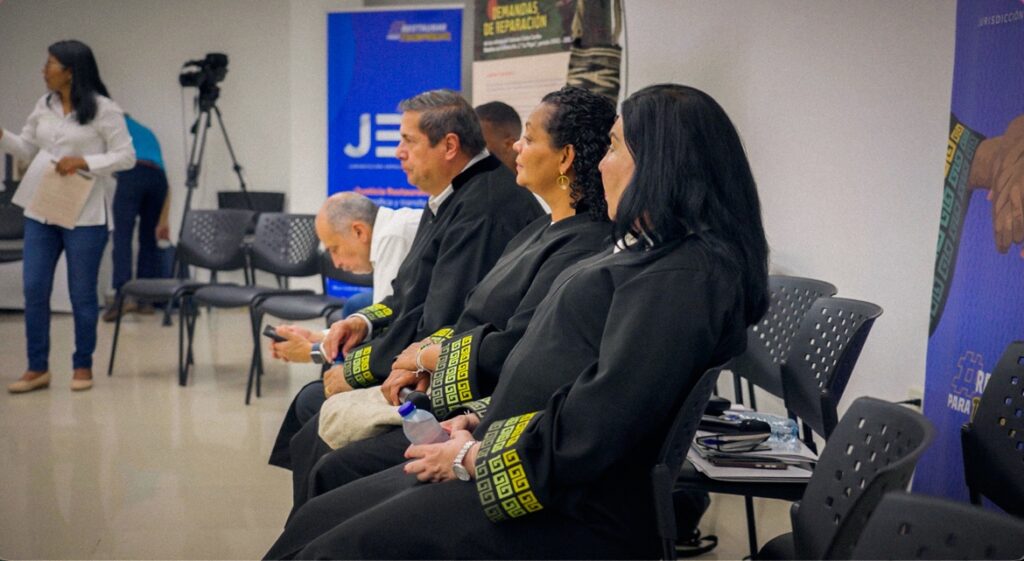
Caption: Victims of the “false positives cases” seek justice their family members in front of the Jurisdicción Especial Para la Paz (JEP). Photographer: César Rojas Ángel / Justice Rapid Response.
Twelve former members of the Colombian Army received restorative sanctions for killings and forced disappearances unlawfully presented as combat casualties.
Nelson Enrique Romero’s case was among them.
For Neftalina Rosa Romero the judgment brought recognition that she had spent more than two decades seeking.
But it also created something tangible.
As part of the restorative sanctions, the JEP included the Casa Cultural Nelson Enrique Romo Romero, a cultural and community space in Badillo.
The house will support education, artistic activities and collective memory within the Afro-Colombian community. It will also commemorate Nelson and other victims.
The people responsible for the crimes will contribute to its implementation.
It is more than a house.
It is an attempt to repair the damage caused by the killings: the stigma, broken family ties, damage to community life and the intergenerational effects of violence.
For Neftalina, restoration therefore reaches beyond recognition of Nelson’s death. It also acknowledges the community and family life disrupted by his killing, and the years she spent carrying his story forward.
“We cannot forget”
Jacqueline Castillo Peña journey is also becoming a story of historic memory.
Together with MAFAPO, she has helped advance the creation of a memorial park in Bogotá, “6.402+ razones para no olvidar”, linked to Case 03.
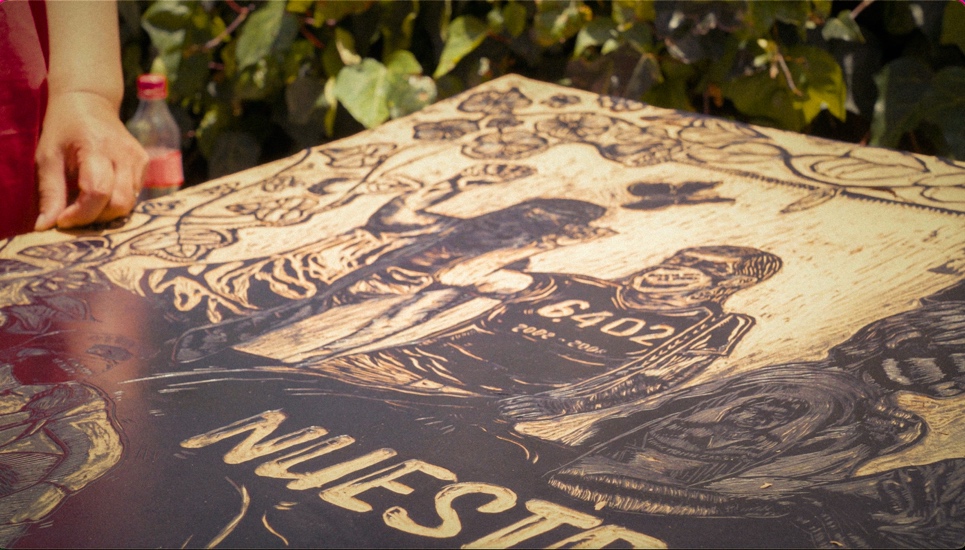
Caption: An outdoor mural memorial to commemorate the victims of the “false positives” cases. Photographer: César César Rojas Ángel / Justice Rapid Response.
The park will commemorate the victims of the falsos positivos and preserve their names in the public space.
For the mothers, memory is part of justice.
Because these men were not numbers.
They were sons, brothers, fathers and friends.
And behind many of their names are women who refused to allow those identities to be erased. Their work as mothers, sisters and daughters became inseparable from the struggle for truth and accountability.
The justice process continues
Colombia has reached an important stage.
The JEP has established facts, identified patterns and issued landmark judgments. Now comes the difficult work of implementing restorative sanctions and ensuring that the commitments made to victims become reality.
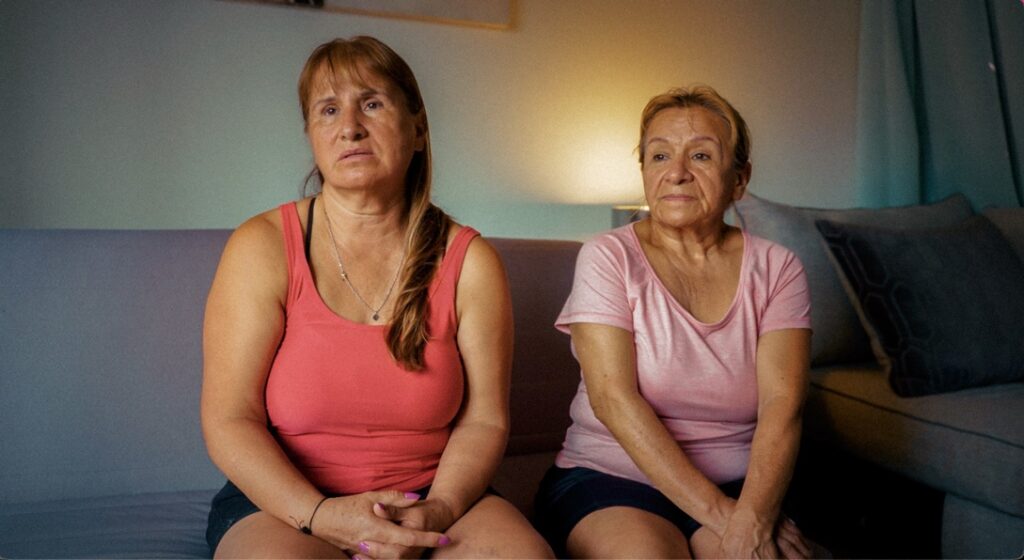
Caption: Jacqueline Castillo Peña, and her sister seek justice for their murdered brother Jaime Castillo Peña. Photographer: César César Rojas Ángel / Justice Rapid Response.
For Neftalina, that means seeing Nelson’s name live on in La Paz.
For Jacqueline, it means ensuring that Jaime and thousands of others are remembered.
For both women, justice is also about ensuring that the experience of families and communities is not treated as secondary to the legal case. Their journeys demonstrate the importance of recognising relatives not only as witnesses to harm, but as rights-holders and participants in the pursuit of truth, justice and reparation.
Neither woman can bring their loved one back.
But through their courage and determination, they are helping to ensure that their stories are remembered, the truth is uncovered, and that Colombia’s path towards justice honours those who can no longer speak for themselves.
Their stories also offer a wider lesson: when women step forward to seek justice, the process must account for the particular risks, responsibilities and forms of discrimination they may face. A justice process that listens to them, protects them and recognises their agency can do more than establish what happened. It can help transform the conditions that allowed violence and impunity to persist.
For further information on the story, please contact Carlota Nunez Strutt, Communication and Partnerships Officer at Justice Rapid Response: c.nunez@justicerapidresponse.org
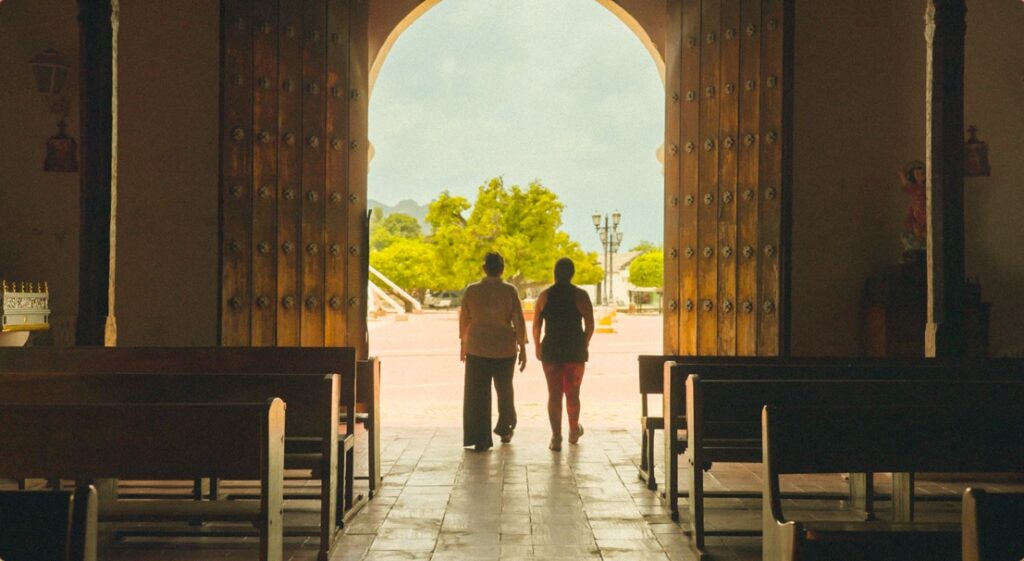
Caption: Resilience in the fight for justice. Photographer: César César Rojas Ángel / Justice Rapid Response.
Hasta que la vida nos alcance: A documentary that tells the story beyond the statistics
The JRR documentary “Hasta que la vida nos alcance” follows Neftalina and Jacqueline through this journey: from the loss of their loved ones, through the painful search for truth, to their encounters with Colombia’s transitional justice system.
It is a story about two women whose relatives were killed in different circumstances and whose cases followed different paths through the JEP.
But it is also a story about gender and justice: about women who transformed personal loss into collective action, who confronted stigma and threats, and who insisted on having a voice in the process of determining what happened to their loved ones.
Acknowledgements
This documentary was produced by Justice Rapid Response (JRR) and directed by César Rojas Ángel, with Olivier Clavet, Mary Díaz Márquez and César Rojas Ángel serving as producers. This documentary was generously funded by the Government of Canada through its Peace and Stabilization Operations Program (PSOP). JRR extends its sincere gratitude to Neftalia Rosa Romero Guzmán, Jacqueline Castillo Peña, Gloria Castillo Peña and the Magistrate Ana Manuela Ochoa Arias for sharing their stories and experiences.
References
Jurisdicción Especial para la Paz (JEP), Auto 033 de 2021, Case No. 03, Deaths illegitimately presented as combat casualties by State agents, 12 February 2021.
Jurisdicción Especial para la Paz (JEP), Case No. 03: Killings and forced disappearances unlawfully presented as combat casualties by State agents, official case information and documentation.
Jurisdicción Especial para la Paz (JEP), JEP issues first judgment for killings and forced disappearances unlawfully presented as combat casualties in the Caribbean Coast, Press Release No. 149, 18 September 2025.
Jurisdicción Especial para la Paz (JEP), The JEP pays tribute to victims of “false positives” and their families, 2024. The JEP has documented the central role of victims and their families in truth, recognition and memorialisation efforts connected to Case No. 03.
United Nations Verification Mission in Colombia, information on the implementation and verification of restorative sanctions under Colombia’s Comprehensive System for Peace.
United Nations, Human Rights Council, Report of the Special Rapporteur on the situation of human rights defenders on his visit to Colombia, 20 November–3 December 2018, A/HRC/40/60/Add.3, 2019, paras. 78–81.
United Nations, Committee on the Elimination of Discrimination against Women, Concluding observations on the ninth periodic report of Colombia, CEDAW/C/COL/CO/9, 14 March 2019, para. 23.
Office of the United Nations High Commissioner for Human Rights (OHCHR), “Families searching for their disappeared still ask: Where are they?”, August 2026.
Office of the United Nations High Commisisoner for Human Rights (OHCHR), Women Human Rights Defenders. Available at.
Commission for the Clarification of Truth, Coexistence and Non-Repetition (Comisión para el Esclarecimiento de la Verdad, la Convivencia y la No Repetición), “‘Queremos una verdad completa y profunda’: madres de víctimas de falsos positivos,” Comisión de la Verdad.
Committee on the Elimination of Discrimination against Women, Concluding observations on the combined seventh and eighth periodic reports of Colombia, CEDAW/C/COL/CO/7-8, 29 October 2013.
[1]Committee on Enforced Disappearances, Summary record of the 421st meeting, CED/C/SR.421, discussion of the situation of women searching for disappeared relatives in Colombia. See also OHCHR, “Families searching for their disappeared still ask: Where are they?”, August 2026,
[2] Committee on the Elimination of Discrimination against Women, Concluding observations on the combined seventh and eighth periodic reports of Colombia, CEDAW/C/COL/CO/7-8, 29 October 2013.